Croatia Survives the Storm: Modric's Record Assist and a Next-Generation Star Send the Chequered Ones to the Round of 32

Philadelphia was supposed to be a coronation for Ghana. The Black Stars had already punched their knockout-stage ticket before a ball was kicked at Lincoln Financial Field on Saturday afternoon, the first time the nation had reached the round of 32 since that devastating, hand-of-Suárez quarter-final run in South Africa in 2010. Sixteen years of group-stage disappointment, two back-to-back early exits, and a managerial carousel that left supporters unsure what to believe had all been worth it. All Ghana needed to do was hold Croatia to a draw and finish second in Group L.
Croatia, a country whose entire footballing identity is built around refusing to accept when the math looks bad, had different ideas.
The Chequered Ones beat Ghana 2-1 to leapfrog the already-qualified Black Stars into second spot in Group L, booking their own passage into the knockout rounds with goals from Petar Sucic and Nikola Vlasic. It was the kind of performance that has come to define this Croatian generation: compact, composed, and somehow always capable of producing something irreplaceable when the tournament asks them a direct question.
The Architect, Still Drawing at 40
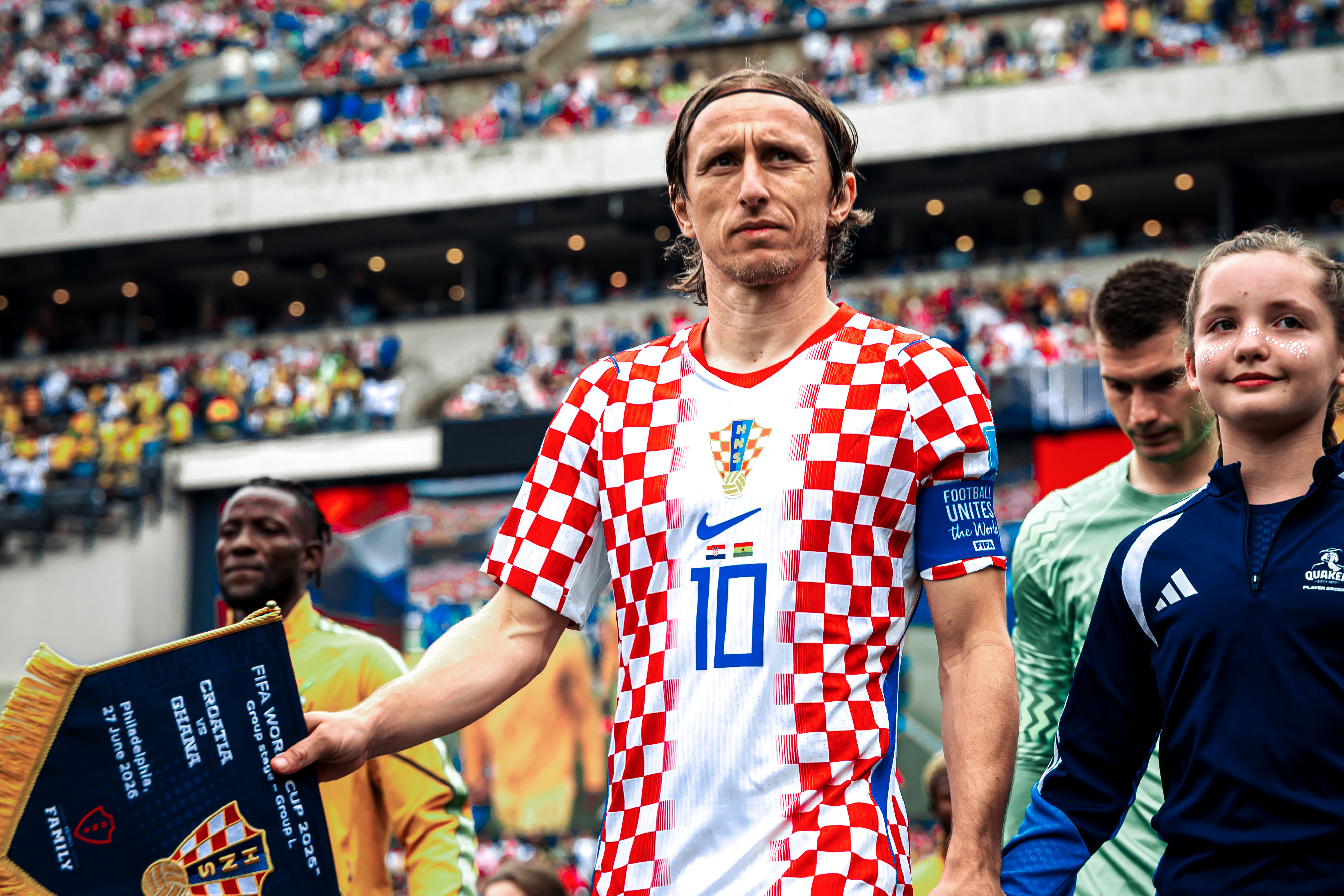
Before anything else can be said about this match, Luka Modric deserves to have his name written at the top of the page. At 40 years and 291 days old, he did not simply participate in this game. He orchestrated it, absorbed pressure, tracked runners in stoppage time, and then delivered the corner kick that won it.
The Croatian captain provided an assist at a FIFA World Cup at the age of 40 years and 291 days, becoming the oldest player on record since Opta began tracking the statistic in 1966. He surpassed a record that had only just been set at this same tournament, overtaking the previous mark held by Edin Dzeko of Bosnia and Herzegovina, who delivered an assist at the age of 40 years and 109 days earlier in the competition.
Modric created a match-high four chances while recording the most touches of any player on the field, with 102, and completing 82 accurate passes. He was not just on the pitch. He was the pulse of the thing.
When Croatia's coach Zlatko Dalic was asked about his captain after the final whistle, he did not dress it up. "Luka was truly fantastic," Dalic said. "He made an assist and stopped a goal twice. That's his character and his energy. He never gave up."
For those who have watched Modric long enough to understand what he represents, the record is almost beside the point. This is a player who won the Ballon d'Or in 2018, who led Croatia to a World Cup final, who has spent the better part of two decades redefining what a modern central midfielder can be. And he is still doing it at an age when most professionals are calling TV studios rather than corners. This was his final World Cup, announced before the tournament began. In Philadelphia, he made sure the footnote reads exactly the way he wanted it to.
Sucic Opens the Ledger with a Statement
If Modric was the veteran proving that excellence has no expiration date, Petar Sucic was the counterpoint: a 22-year-old Inter midfielder who walked into this match needing to show that Croatia's next chapter would not depend entirely on its last one.
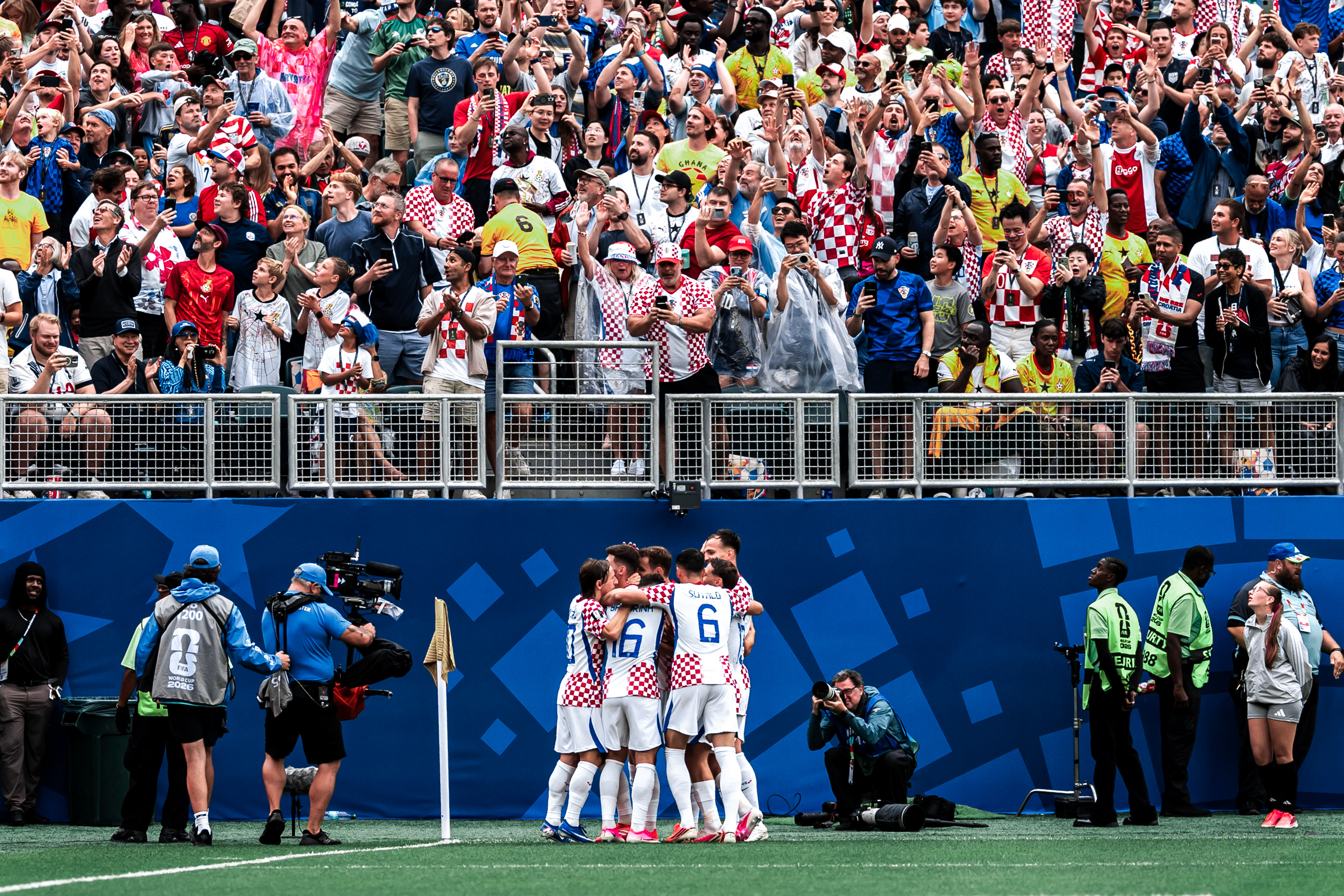
Following Nikola Vlasic's striking of the post earlier in the half, Sucic was found by Mateo Kovacic and whizzed a fine daisy-cutter through defensive legs and into the bottom-left corner to catch goalkeeper Benjamin Asare unaware just past the half-hour mark. It was the kind of technically perfect, low, driven strike that goalkeepers simply cannot guess their way to stopping. The ball found the bottom corner like it had somewhere specific to be.
At 22 years and 245 days, Sucic became the second-youngest goalscorer for Croatia at the FIFA World Cup, trailing only Josko Gvardiol, who scored against Morocco at the 2022 tournament aged 20 years and 328 days. Two generational talents bracketing a record. Croatia has a way of producing them, and a way of deploying them before they fully realize what they are capable of.
Sucic has been with the Croatian national team since 2024, navigating his first World Cup at senior level. Based on Saturday's performance, he will not be in a hurry to let the experience end.
Ghana Responds, VAR Weighs In
The second half was a different match. Whatever instructions Ghana's manager Carlos Queiroz delivered at the break, they worked. The Black Stars pressed higher, moved with more urgency, and eventually forced the moment that briefly made Philadelphia tilt in their direction.
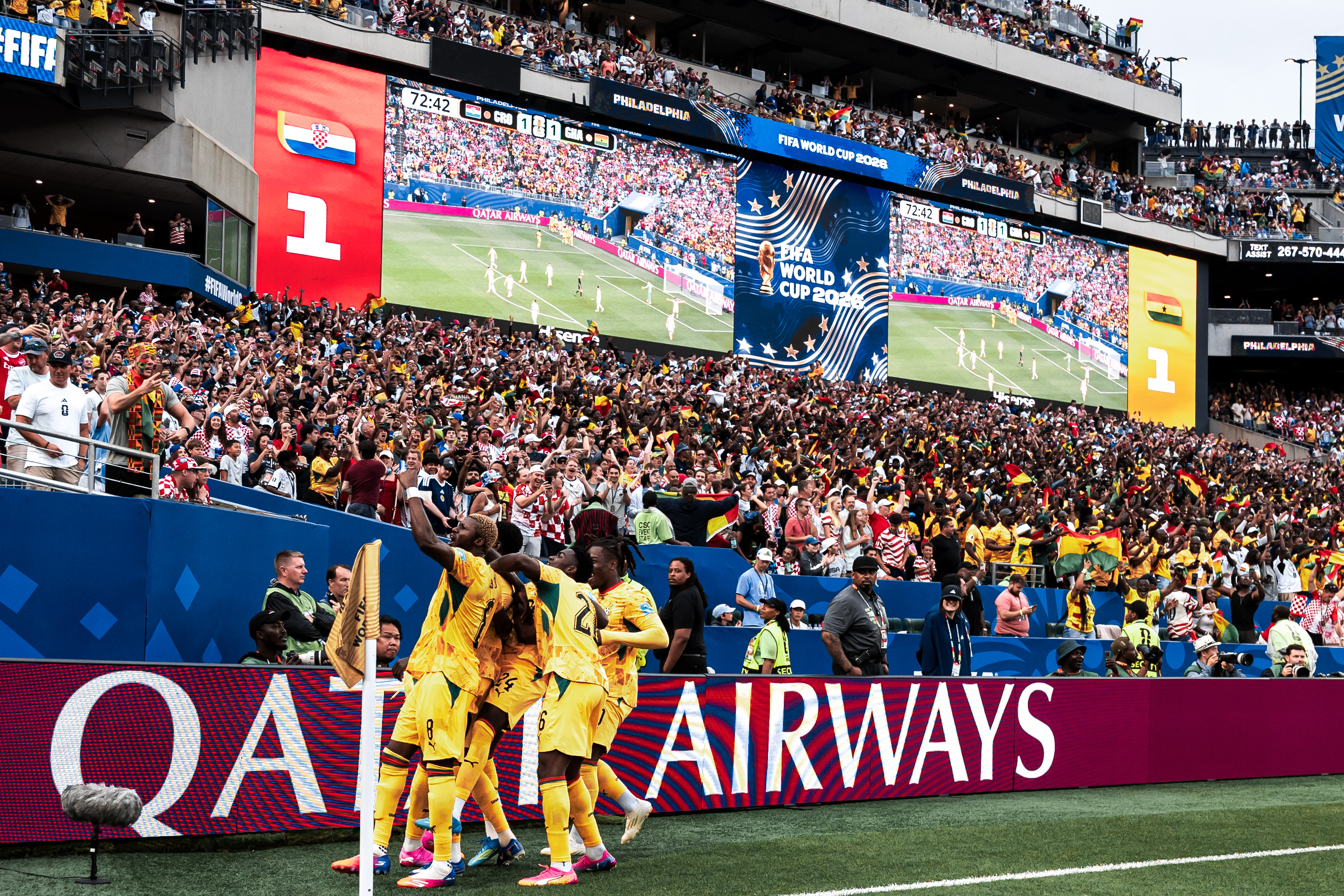
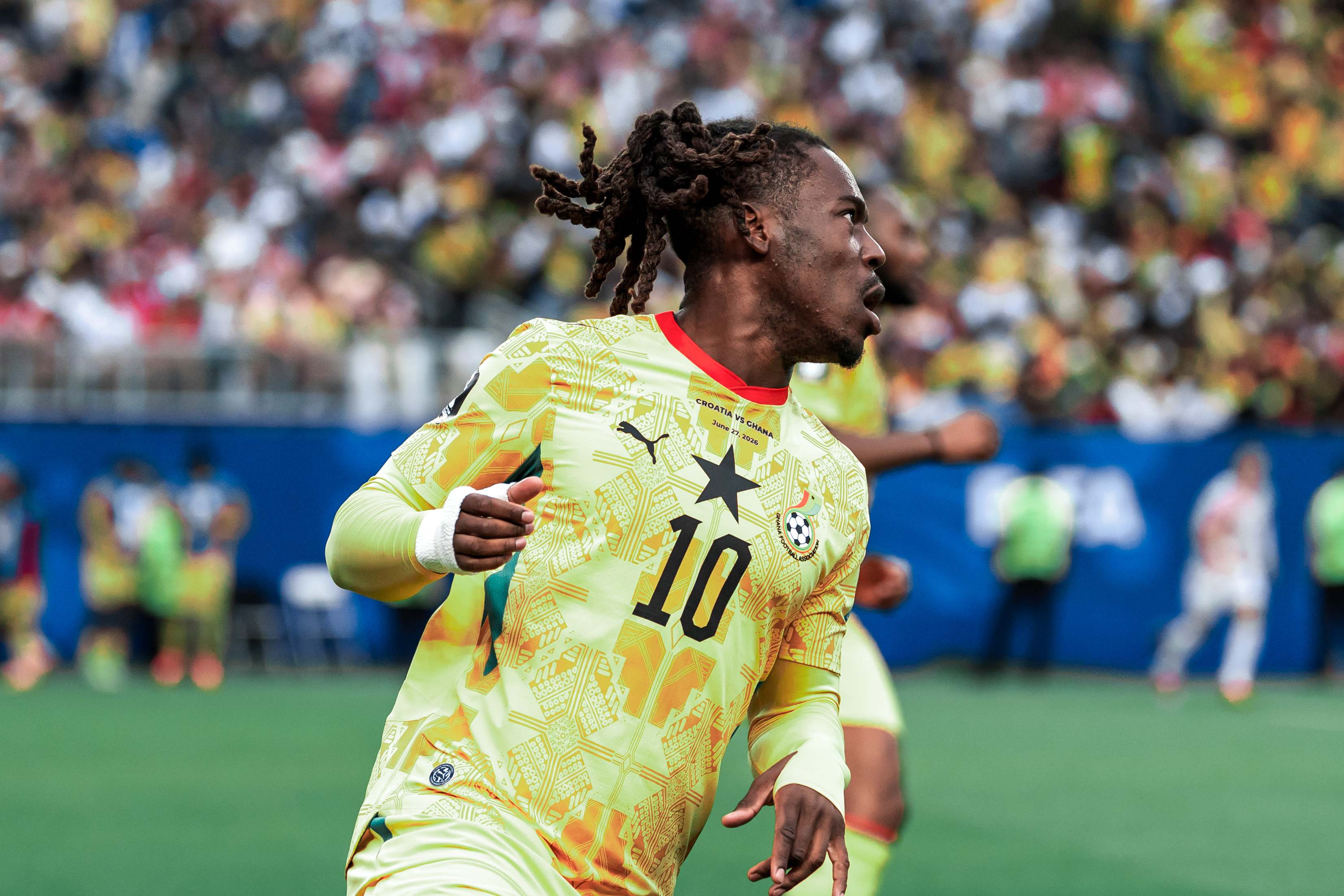
Derrick Luckassen found the equalizer in the 73rd minute, volleying in Ernest Nuamah's free-kick delivery with the goal standing after an extended VAR review of nearly four minutes confirmed there was no offside. The celebration from the Ghanaian supporters in the stands was immediate and uncontrollable. A goal that barely survived multiple replays felt like poetic justice for a fanbase that had survived multiple World Cup cycles without tasting knockout football.
Luckassen's goal was the first of the five group-stage games played in Philadelphia where both teams scored. It also made him a piece of trivia that Ghana supporters will hold onto: Derrick Luckassen, who happens to be the brother of the Netherlands' Brian Brobbey, scoring his first-ever senior international goal at the World Cup in the exact moment his country needed it most.
The ghost of Antoine Semenyo hung over much of the second half. Ghana seemed poised to level late in the first half when Semenyo beat his man and fired a shot that slid across the Kentucky bluegrass and went just wide of the left post. He finished third in the Premier League with 17 goals last season and was one of Manchester City's best players after it bought him from Bournemouth, yet he could not connect in the World Cup against Panama, England, or Croatia's backline. There is a cruelty specific to the World Cup where form, reputation, and statistical reality can all dissolve in the space of a wide post. Semenyo had the tools. He just could not find the lock.
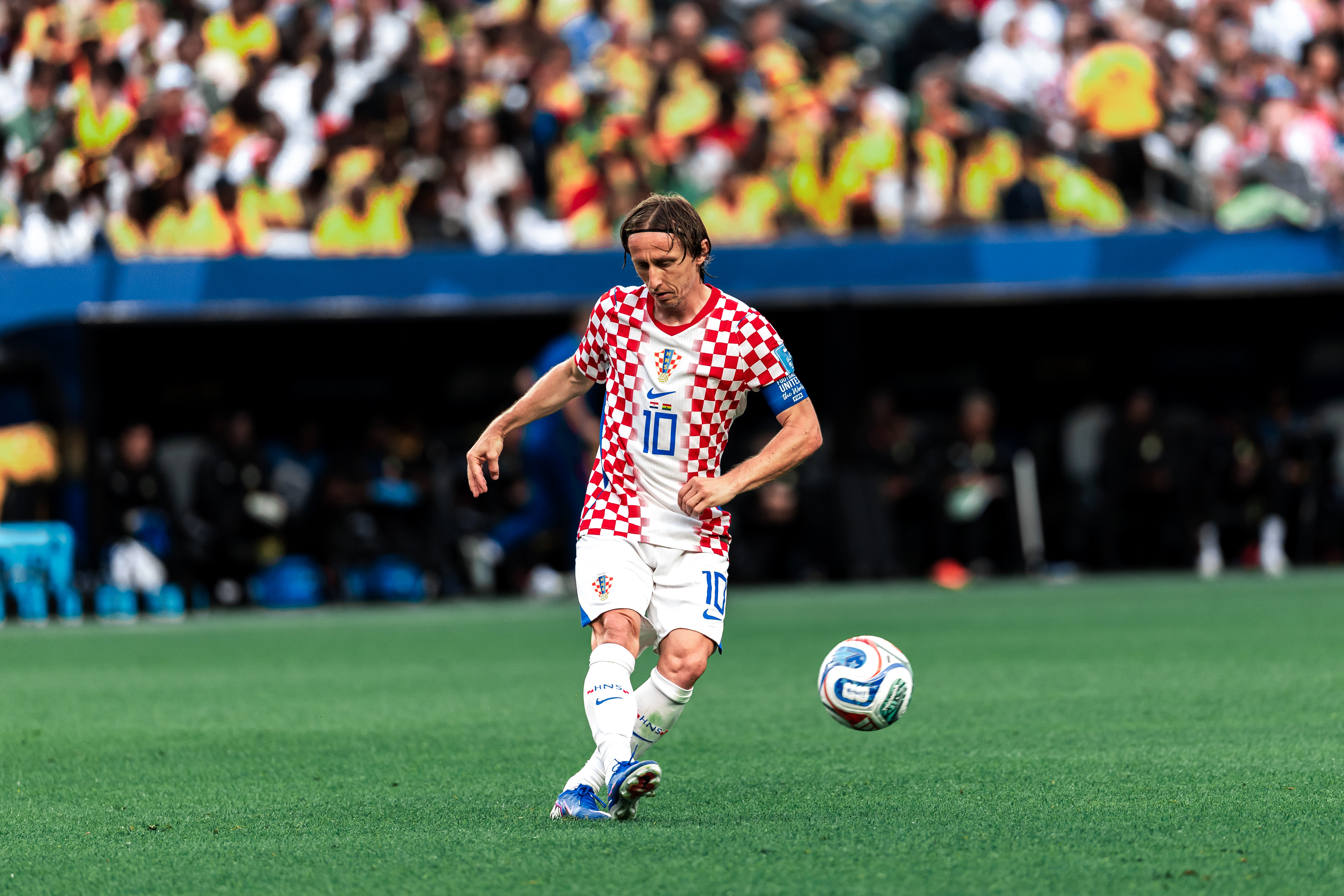
The Defining Moment: Modric to Vlasic
When Ghana leveled, the match suddenly held a new shape. Croatia needed something. With seven minutes of regulation remaining, Modric walked to the corner flag, placed the ball, and delivered.
Nikola Vlasic scored the winner in the 83rd minute, assisted by Luka Modric from a corner. Modric curled a perfectly weighted delivery from the corner flag, and Vlasic converted it to secure a 2-1 victory over the Black Stars at Lincoln Financial Field. The header was precise, directed into the bottom-left corner, and it kissed the inside of the post on its way in. It was the kind of goal that reminds you how much craft exists in a perfectly struck set piece.
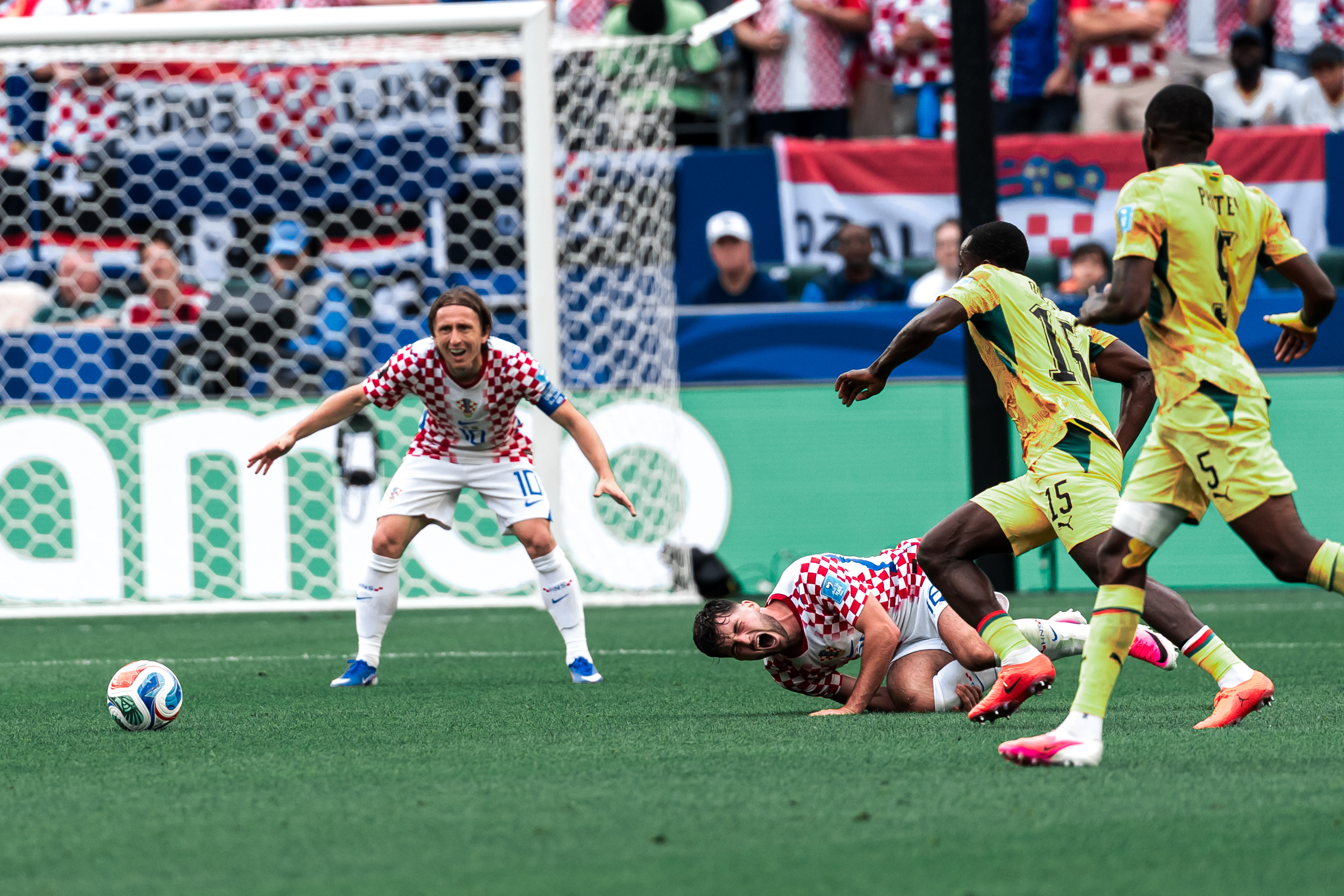
Modric was also on hand to block a Ghana effort in the Croatian penalty area in stoppage time, denying the Black Stars what would have been an equalizer. One delivery that won the game. One intervention that preserved the result. All from the oldest outfield player on the pitch, doing it in the way only he knows how.
What the Numbers Actually Say
Croatia registered eight total attempts to Ghana's six, with four of Croatia's attempts on target compared to just one for the Black Stars. Both teams had three attempts from inside the penalty area.
Croatia played above their expected goals mark of 0.42, while Ghana worked reasonably well within their 0.74 xG. That gap in expected output tells you everything about the pattern of the game. Ghana defended competently and made Croatia work for their opportunities. Croatia simply found a way through twice anyway.
The xG disparity also reflects something real about the tactical architecture of the match. Croatia controlled the tempo through their midfield trio, used Modric as a tempo-setter, and asked their attackers to find pockets rather than manufacture volume. Ghana absorbed, waited, and erupted in the second half. It nearly worked.
What It Means Going Forward
Zlatko Dalic's side finish runners-up in Group L and will play the second-placed team from Group K in the knockout stage. Croatia will look to build on the blend of youthful promise and veteran leadership displayed against Ghana. The Sucic-Modric dynamic is not a novelty. It is a genuinely workable combination: a player in his final chapter and a player in his first, sharing the same moment.
For Ghana, the defeat stings, but the narrative does not turn. It is the first time Ghana will play knockout football at a FIFA World Cup since 2010 in South Africa, when the Black Stars stunned the United States in the round of 16 and came within a Luis Suárez handball and an Asamoah Gyan crossbar of becoming the first African nation to reach a World Cup semi-final. Two subsequent World Cups in Brazil in 2014 and in Qatar in 2022 ended in group-stage disappointment. That drought is over.
Ghana are expected to face Colombia in the Round of 32 in Kansas City. A match against one of South America's most technically gifted squads will be a genuine test of whether Queiroz's resurgent side can carry the momentum they built in the group stage into the deeper waters of a knockout tournament. The tools exist. The question is whether Semenyo and the generation around him can find what eluded them in Philadelphia when the margin for error shrinks further.
Closing Take
There is a specific kind of story that the World Cup keeps returning to, and Croatia keeps starring in it. The country of four million people, the chequered shirts, the midfield craftsmen, the uncanny ability to survive moments when survival feels improbable. Zlatko Dalic, who has now led Croatia at five major international tournaments and counting, has turned resilience into an institutional trait.
Saturday in Philadelphia was the story of two records made 18 years apart. Modric at 40, still directing from the corner flag, history attached to his delivery. Sucic at 22, writing himself into a record book that previously only Josko Gvardiol had touched for Croatia at this age. The oldest and the youngest, stitched together in the same 90 minutes, pointing toward a round of 32 matchup that Croatia now enters with more than just relief.
Ghana advanced too, and that matters. But the manner of the loss matters as well. The Black Stars came here to prove they belong in the knockout rounds again. They do. What they could not prove, not yet, is that they belong in a fight with Portugal or Colombia in the next phase. That proof is still outstanding, and it will be demanded of them soon.
For Croatia, the proof is already on the field. It always seems to be.