Europe Silences New York, Stuns Team USA in Historic 15–13 Upset
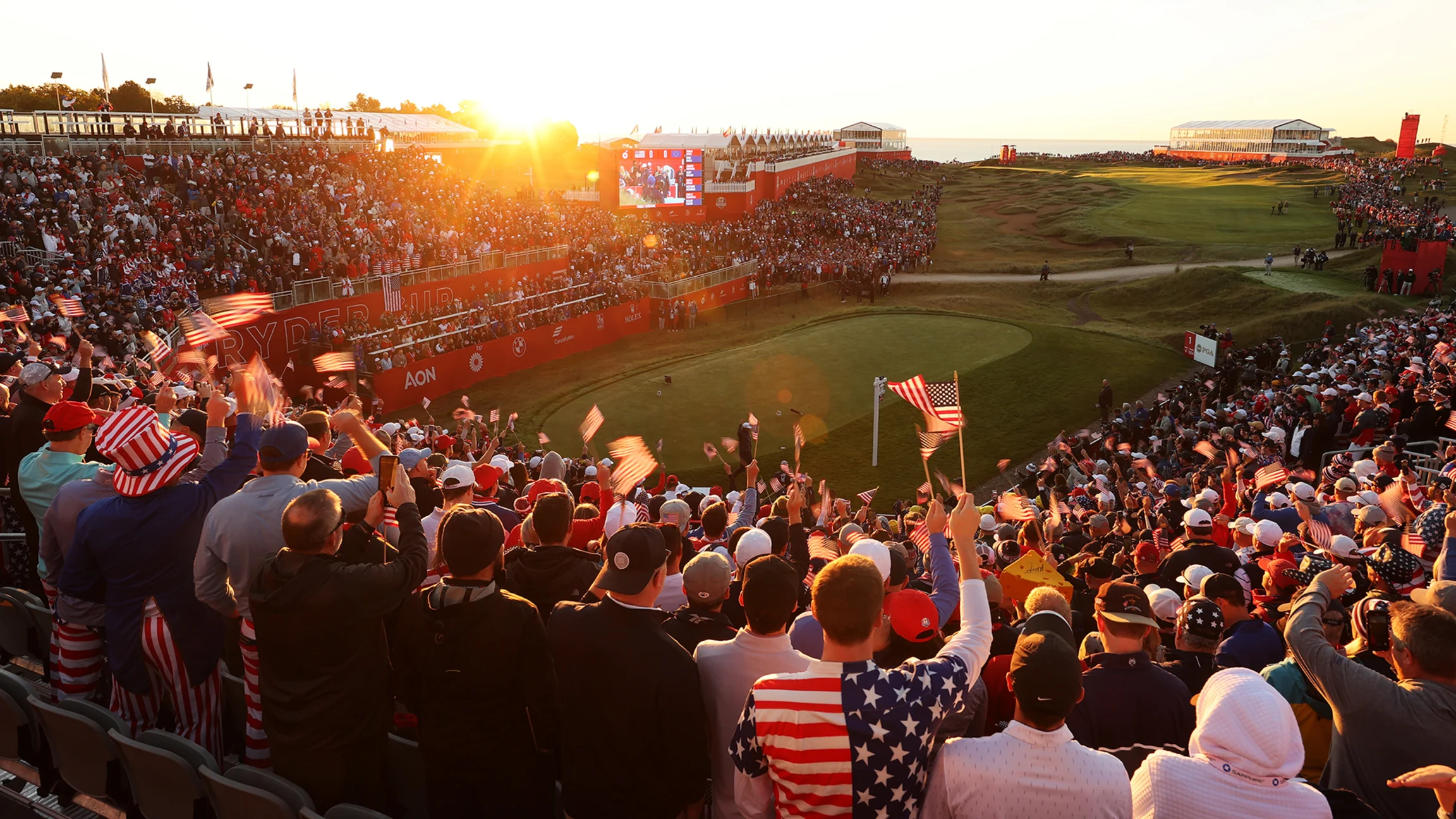

Bethpage Black doesn’t do subtle. It never has. It’s loud, punishing, unapologetic, and built to expose weakness. So when Europe walked into Long Island and walked out with the Ryder Cup, it wasn’t just a road win — it was a full-on heist in one of the most hostile environments golf has to offer. The 45th Ryder Cup, staged September 26–28 at Bethpage State Park, ended with Europe defeating the United States 15–13, a result that will live in Ryder Cup lore right next to Medinah.
The Americans wanted a fortress. Europe turned it into a crime scene.
This was Europe’s first Ryder Cup victory on U.S. soil since 2012 — the infamous Miracle at Medinah — and only the fifth time ever the Europeans have pulled it off in America. In a format designed to amplify pressure and emotion, with a New York crowd dialed up to eleven, Luke Donald’s team didn’t just survive. They leaned into the chaos, absorbed the noise, and beat the United States at its own game.
Bethpage, Built for War
From the jump, this Ryder Cup felt different. Bethpage Black isn’t a neutral venue; it’s a weapon. Narrow fairways, brutal rough, and greens that punish hesitation — all wrapped in a setting where fans don’t politely clap, they roar. Team USA, captained by Keegan Bradley, leaned fully into that energy. The idea was simple: turn the volume into an advantage, make Europe uncomfortable, and ride emotion through three days of match-play mayhem.
Instead, the noise seemed to harden Europe.
Donald, now with a second Ryder Cup captaincy under his belt, set his team up with the calm confidence of someone who understands the event isn’t about talent accumulation. It’s about pairings, patience, and emotional control. Europe didn’t try to win Bethpage over. They tried to outlast it.
That mindset became the defining theme of the week.
The Match-Play Chessboard
Ryder Cups are never won in one session, but they can absolutely be lost in them. Over three days of foursomes, fourballs, and singles, momentum swings like a pendulum with a grudge.
Europe consistently found ways to split sessions or steal points where the margins were thin. Halved matches mattered. Narrow wins mattered. Matches that flipped on a single hole late mattered even more. While the U.S. often looked like the more explosive side, Europe played the long game — grinding matches down, dragging opponents into uncomfortable spots, and capitalizing when impatience crept in.
Bethpage demanded precision and discipline. Europe delivered both.
The Americans’ Roller Coaster
For Team USA, the story was complicated. There were moments when Bethpage felt exactly like the advantage it was supposed to be. The crowd surged. The body language was electric. Wins came in bunches, and the Americans repeatedly threatened to tilt the entire event back in their favor.
But Ryder Cups don’t reward peaks as much as they punish valleys.
Every time the U.S. looked ready to pull away, Europe answered with a gut-punch. A stolen point here. A comeback there. A quiet, ruthless finish in a match that felt like it should have gone the other way. The Americans never collapsed — this wasn’t a meltdown — but they never sustained control long enough to fully break Europe’s resistance.
By Sunday, the math tightened. The margin narrowed. Every singles match felt like it was worth double.
Sunday Singles: Pressure Without Oxygen
Singles matches at a Ryder Cup are golf stripped to its most uncomfortable form. No partner. No safety net. Just you, your opponent, and 30,000 people ready to react to every swing.
Europe entered Sunday with work left to do. The U.S. needed a rally. What followed was exactly what makes Ryder Cups addictive: simultaneous chaos. Matches flipped. Leads evaporated. Halves piled up. And slowly, almost imperceptibly, Europe started crossing the finish line one point at a time.
The United States fought. Hard. But the math never quite swung far enough.
When the final point landed and Europe officially hit 15, the reality set in: Bethpage Black had been conquered.
Luke Donald’s Masterclass
This win will age well for Luke Donald.
Captaining on the road in a Ryder Cup is already a nightmare assignment. Doing it in New York, at Bethpage, against a motivated American team, elevates the difficulty to borderline absurd. Donald’s fingerprints were all over this victory — from pairings that emphasized chemistry over star power to a steady refusal to panic when sessions tightened.
Europe never looked rattled. That’s not an accident.
This Ryder Cup wasn’t about one superstar carrying the load. It was about depth, buy-in, and a team that understood exactly what kind of fight they were walking into. Donald’s Europe played like a group that trusted the plan, trusted each other, and trusted that patience would eventually be rewarded.
It was.
Why This Loss Will Sting the U.S.
For the Americans, this one hurts differently.
Home Ryder Cups are supposed to be automatic. The crowd. The setup. The comfort. The narrative. When you lose on home soil, especially in a place like Bethpage, the questions come fast and loud. About preparation. About strategy. About whether emotion crossed the line from fuel to distraction.
Keegan Bradley’s team didn’t fail spectacularly. They just came up short in the moments where Ryder Cups are actually decided — the tight matches, the halved holes, the grinding finishes late in the day.
This wasn’t a talent issue. It was a margins issue. And in Ryder Cup history, margins are everything.
A Result That Shifts the Rivalry
Zooming out, this Ryder Cup changes the conversation.
Europe winning on U.S. soil for the first time since Medinah reinforces a trend that can’t be ignored: this rivalry is no longer cyclical. It’s competitive every single time, regardless of venue. The old assumptions — Europe wins at home, the U.S. wins at home — don’t hold the same weight anymore.
Bethpage was supposed to be a reset for Team USA. Instead, it became another reminder that Ryder Cups aren’t won by geography. They’re won by execution under stress.
Europe has mastered that art.
The Lasting Image
Years from now, the defining image of the 2025 Ryder Cup won’t be one specific shot or celebration. It will be the sound — or lack of it. The gradual quieting of a New York crowd as Europe methodically closed the door, point by point, until there was nowhere left for the noise to go.
Bethpage Black didn’t betray Team USA. It simply told the truth.
And the truth was this: Europe walked into one of the loudest, hardest places to play golf in the world and left with the Ryder Cup. Again.