Michigan's Compliance Crisis: A Closer Look at the NCAA Investigation
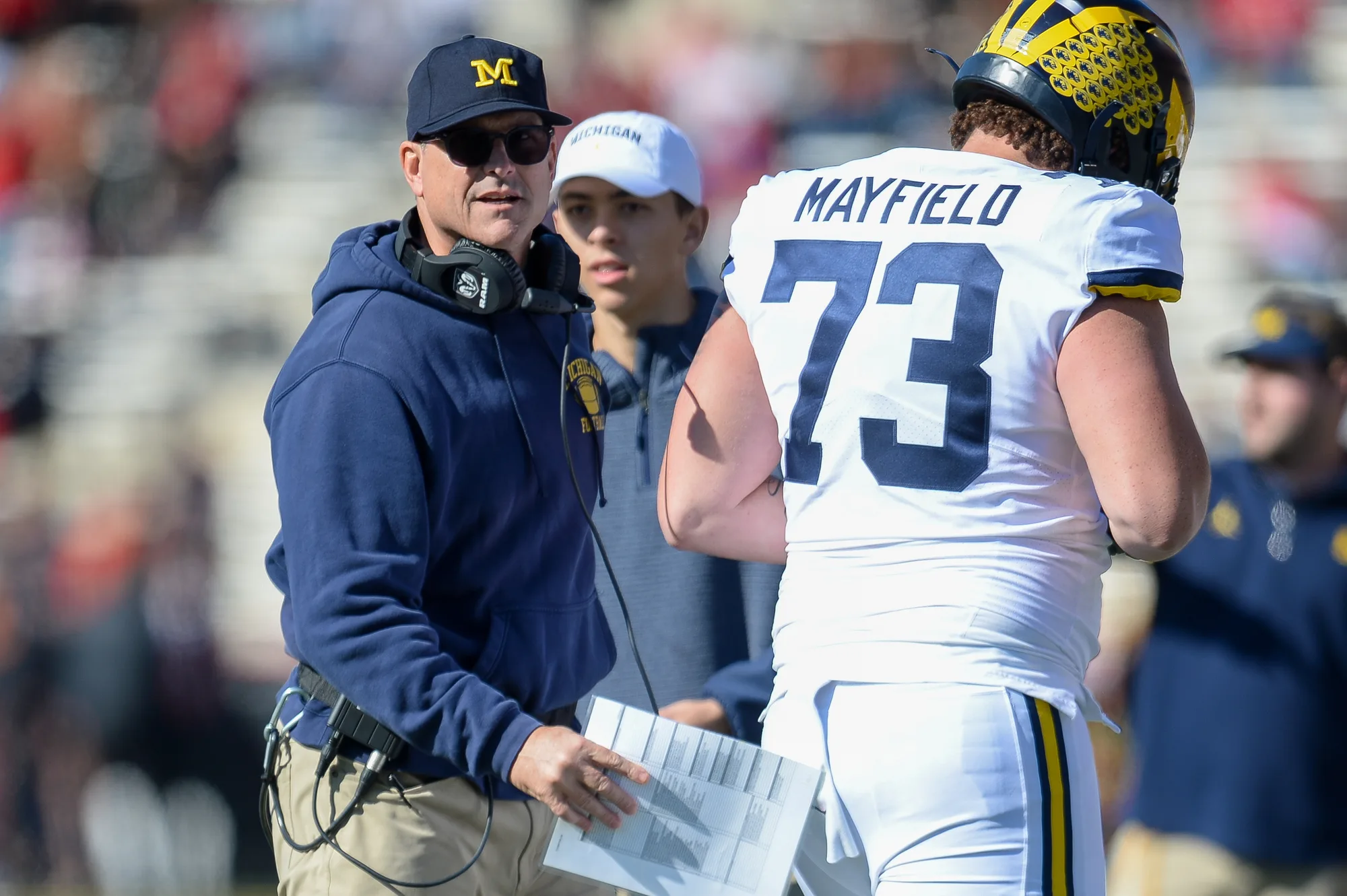

Five weeks ago, Jim Harbaugh addressed the media, emphasizing his commitment to setting a "gold standard" for rules compliance. This came after his return from a self-imposed three-game suspension that Michigan had imposed on itself due to alleged NCAA violations that had occurred during his tenure. At the time, Harbaugh praised Michigan's compliance efforts but also expressed the need to implement new policies to ensure that such incidents wouldn't happen again. He stated..
"We've done an incredible job...we've gone to the nth degree to follow every rule."
However, recent events have cast a shadow over these claims. Just a little over a month later, Michigan finds itself facing another NCAA investigation, this time for alleged violations of the in-person scouting rule. Michigan suspended one of its staff members, Connor Stalions, with pay after he emerged as a key figure in the NCAA's investigation. The Athletic reported that Stalions had purchased tickets under his own name for games involving at least five of Michigan's opponents over the past three seasons.
It's important to note that a staff member buying tickets to Big Ten football games in itself does not violate NCAA rules. Nor does forwarding these tickets to others. It's conceivable that Stalions, a former student volunteer who joined Michigan's recruiting department in 2022, is merely an enthusiastic college football fan accustomed to buying and selling tickets on the secondary market out of his own pocket.
The real issue arises if these tickets were being used for scouting purposes, which would indeed be an NCAA violation. The pattern of Stalions' ticket purchases raised suspicions within the Big Ten community. These seats were consistently positioned near the midfield with a clear view of the sideline, sometimes on both sides of the stadium. There have been reports of an individual captured on security footage, sitting in a seat purchased by Stalions, and filming the opposing team's sideline with a smartphone.
The NCAA explicitly prohibits "off-campus, in-person scouting of future opponents," and the NCAA football rules forbid the taping of signals. While there might be technical debates about what qualifies as scouting, the intent is clear: schools are not supposed to send individuals to other stadiums to record other teams' signals. If that's indeed the case here, Michigan has a potentially significant problem on its hands. The extent of this issue depends on several factors, with a crucial one being whether Jim Harbaugh or any members of his coaching staff had knowledge of these actions.
In response to these developments, Harbaugh released a statement denying any involvement in directing off-campus scouting assignments and asserting he had no awareness of any staff member's participation in such activities. As of now, no evidence has emerged to dispute his claims. However, this investigation is in its early stages, and the NCAA will be keen to determine if Stalions funded these ticket purchases independently or received assistance from other sources. While the current evidence is not conclusive, it does raise concerns.
The question that looms large is why other Big Ten schools recognized the potential problem with Stalions' actions while Michigan seemingly did not. At its worst, this could imply that Harbaugh was aware of and endorsed Stalions' actions. At its best, it suggests that the responsibilities within a Big Ten football program are vast, and the head coach cannot reasonably monitor the actions of a large number of players, assistant coaches, and support staff.
However, this underscores the need for an effective oversight system within the program. Given Michigan's recent history of NCAA violations, including impermissible contact with recruits and analysts performing coaching duties, the program should have been on high alert after Harbaugh's suspension. Even if the actual violations are less severe than they appear, someone within the program should have been vigilant about spotting red flags. The timeline for these ticket purchases is unclear, but they reportedly pertain to games from this season, including high-profile matchups like Penn State versus Ohio State. Such actions are bold for a program already under NCAA scrutiny.
Connor Stalions, although not a former college football player, had developed a reputation within the Michigan program for his ability to decipher opponents' signals. His background as a former U.S. Marine and Naval Academy graduate led him to describe himself as someone keen on "identifying and exploiting critical vulnerabilities."
Unfortunately, Michigan's success in the Big Ten, including a string of 20 consecutive victories, has been largely attributed to players like Aidan Hutchinson, Blake Corum, and J.J. McCarthy, not a staffer with potential signal-decoding skills.
This incident isn't the first controversy to surround Jim Harbaugh's program. Earlier, there was an NCAA investigation into alleged violations during the COVID-19 dead period, resulting in his suspension, as well as the firing of co-offensive coordinator Matt Weiss amid a police investigation into suspicious computer activity at Schembechler Hall. This investigation remains ongoing.

In light of this history, a program dedicated to adhering to rules with utmost precision would have ensured that any sign-deciphering operations were entirely within legal boundaries, particularly in light of past missteps. Even if Harbaugh was unaware of Stalions' activities, NCAA rules place the responsibility on head coaches for what occurs within their programs. Harbaugh's previous statements about implementing policies to protect himself and his staff should have been taken more seriously and translated into action to prevent another suspension.
The investigation is still unfolding, but at face value, these developments could worsen Michigan's NCAA troubles and potentially sideline Jim Harbaugh once more. It's evident that someone should have been more vigilant regarding the potential for scandal and controversy, a situation Michigan can ill afford as it strives for a national championship. While trying to uncover the vulnerabilities of their opponents, Michigan appears to have missed a significant vulnerability within its own ranks.