Preston Judd Stuns Portland Early as San Jose Earthquakes Cruise Past Timbers 3-1


The Portland Timbers barely had time to settle into the match before everything started unraveling.
Two minutes into the night at Providence Park, Preston Judd hit them with the kind of goal that changes the entire emotional temperature of a stadium. By the 12th minute, he had another. And before Portland could fully recover from the shock, San Jose added a third and turned one of MLS’s loudest home environments into a frustrated, anxious mess.
The San Jose Earthquakes walked into Portland and left with a commanding 3-1 win, fueled by Judd’s early brace, relentless transition attacks, and a defensive performance that bent under pressure but never fully broke.
For Portland, this felt like one of those nights where the game was effectively lost before it ever truly began.
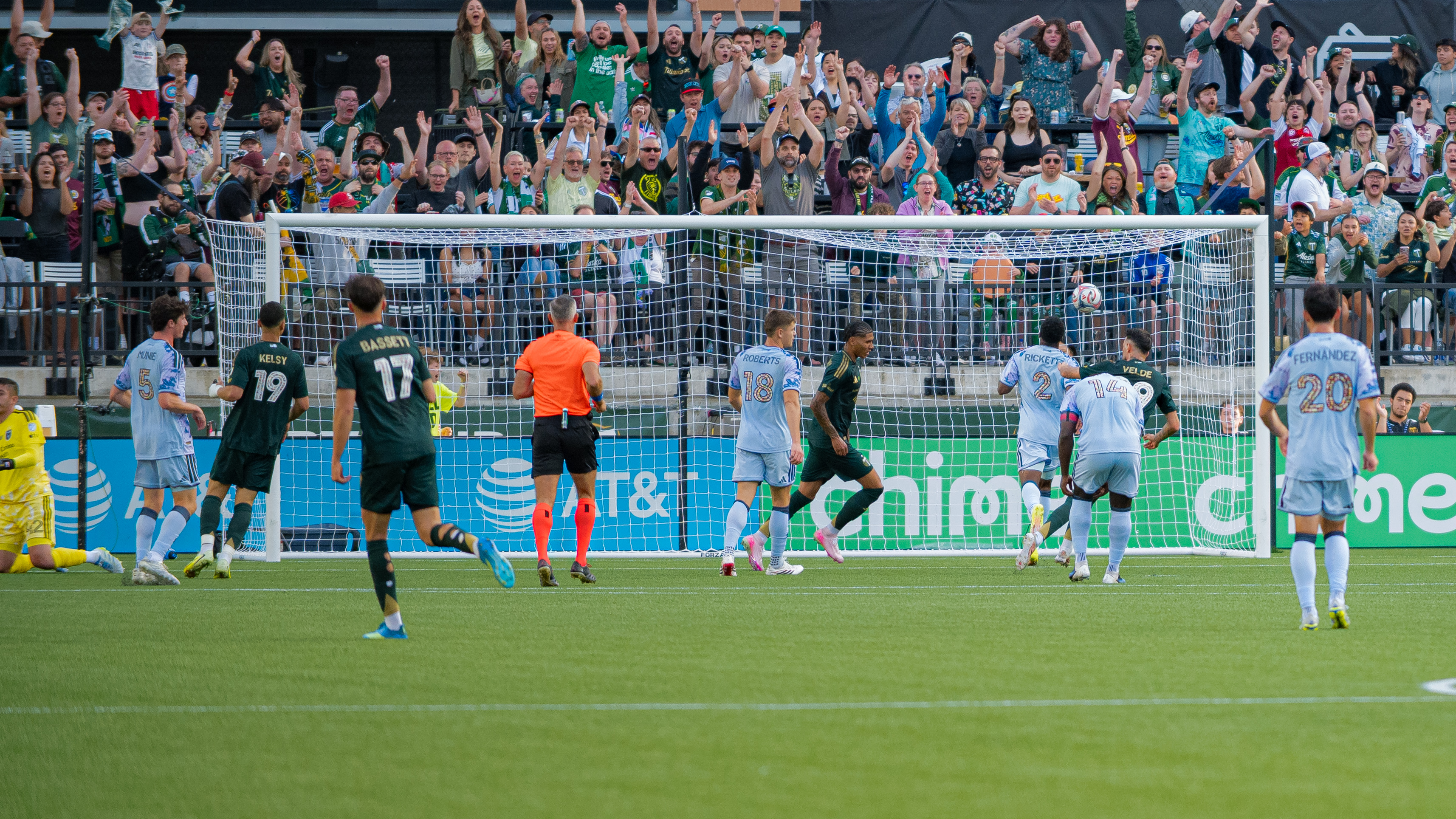
San Jose landed the first punch immediately
The Earthquakes could not have scripted a more ruthless opening.
Just two minutes after kickoff, Jack Skahan sparked a fast break and found Preston Judd charging into space on the right side of the box. Judd finished calmly into the bottom-left corner, stunning the home crowd almost instantly.
That goal exposed the exact problem that haunted Portland all night: transition defending.
The Timbers repeatedly got caught too open in midfield, too slow recovering defensively, and too vulnerable once San Jose started attacking directly. Every time Portland pushed numbers forward, the Earthquakes looked dangerous breaking the other way.
Then came the second blow.
In the 12th minute, Nick Fernandez slipped another dangerous ball into Judd, and the striker buried his second of the night with a clinical finish into the top-right corner.
Two shots. Two goals. Twelve minutes.
Providence Park went from energized to nervous in record time.
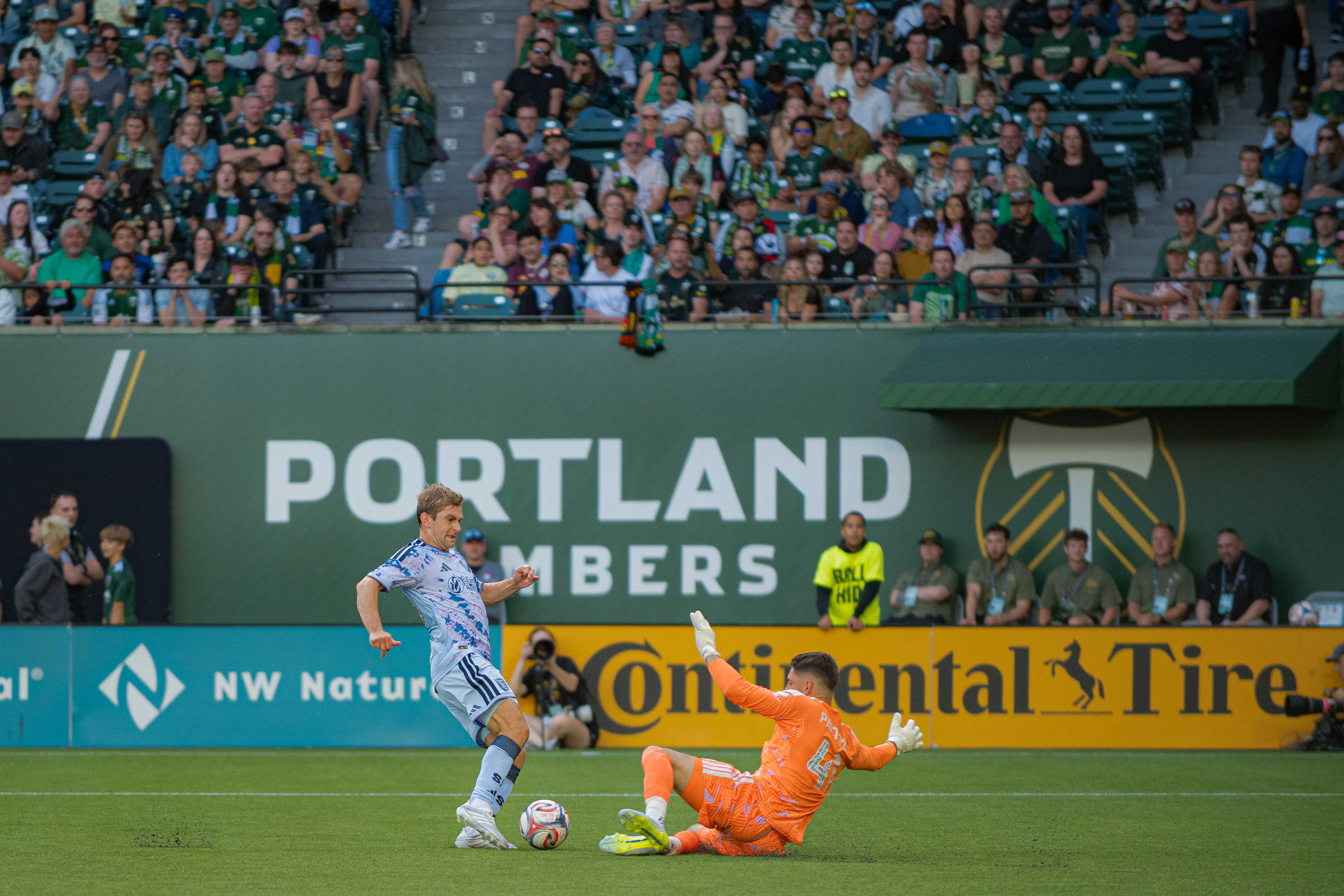
Antony briefly gave Portland life
To Portland’s credit, they responded instead of collapsing completely.
The Timbers started pushing higher up the field, David da Costa began finding pockets between the lines, and Antony finally provided the breakthrough they desperately needed.
In the 18th minute, da Costa threaded a perfectly weighted through ball into Antony, who finished from the center of the box to cut the deficit to 2-1.
For a moment, the momentum shifted.
Portland started creating chances through Kristoffer Velde and Kevin Kelsy. The movement improved. The press became more aggressive. The crowd came back to life.
But every time it felt like the Timbers were preparing to fully swing the match back in their favor, San Jose answered with composure.
That has not always been the reputation surrounding this Earthquakes group in recent years. Too often, San Jose has looked chaotic defensively or emotionally fragile once momentum shifts. On this night, though, Bruce Arena’s side looked organized, mature, and comfortable absorbing pressure.
And then they delivered the knockout punch before halftime.
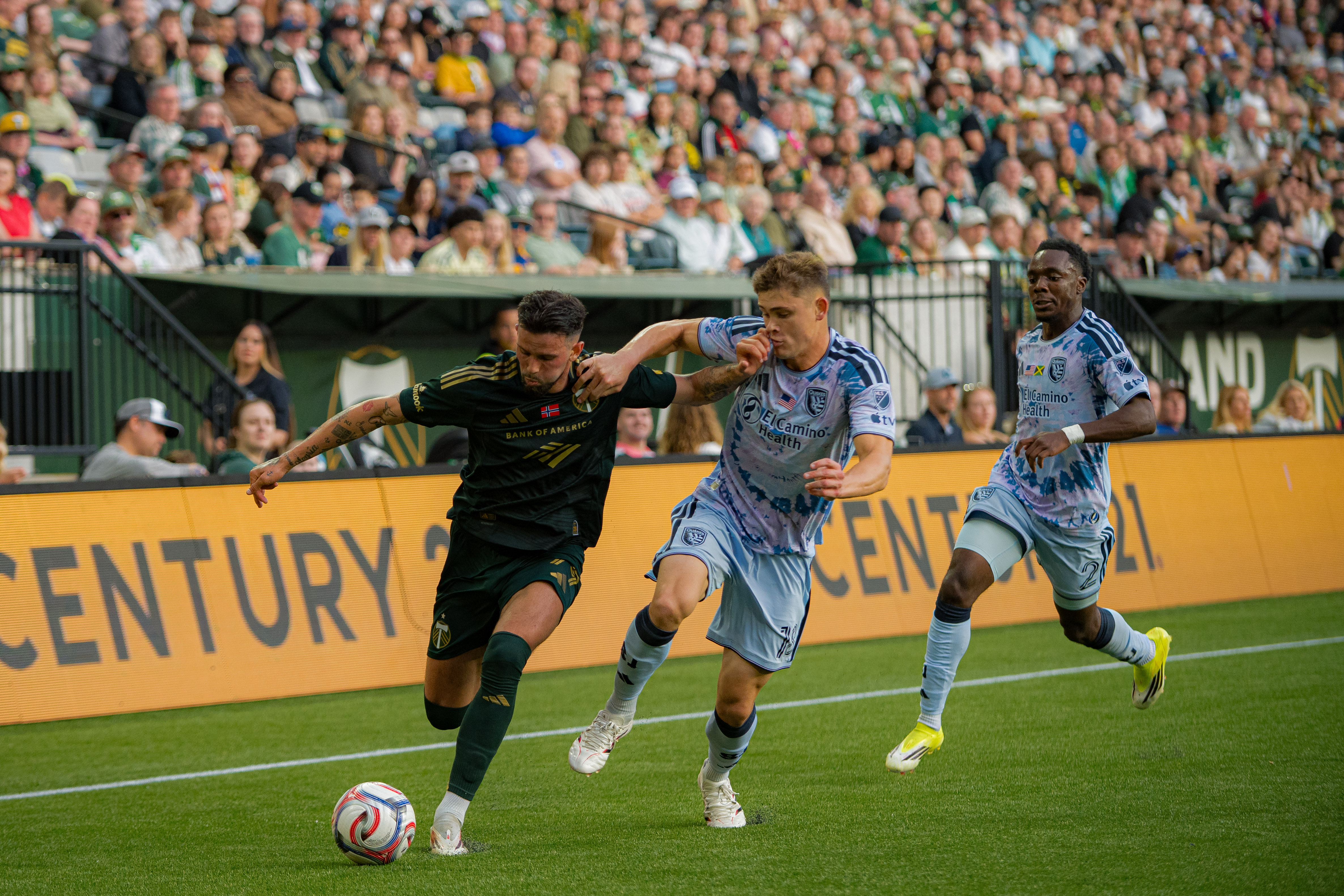
Daniel Munie’s goal changed the night completely
The defining moment came in the 24th minute.
After earning a corner, San Jose capitalized on Portland’s defensive confusion inside the box. Jack Skahan delivered the service, and Daniel Munie finished from close range to restore the two-goal advantage at 3-1.
That goal felt enormous.
Instead of Portland entering halftime down one and believing a comeback was inevitable, the Timbers suddenly faced a two-goal climb against a team that had already proven deadly in transition.
The emotional swing was obvious.
San Jose slowed the game down intelligently after the third goal. Ronaldo Vieira and Beau Leroux controlled key stretches in midfield, while the Earthquakes back line forced Portland into lower-quality chances for much of the evening.
Meanwhile, Portland started showing signs of frustration.
The Timbers finished the first half with several near-misses, including opportunities from Kevin Kelsy and Antony, but nothing that seriously shifted the pressure back onto San Jose.
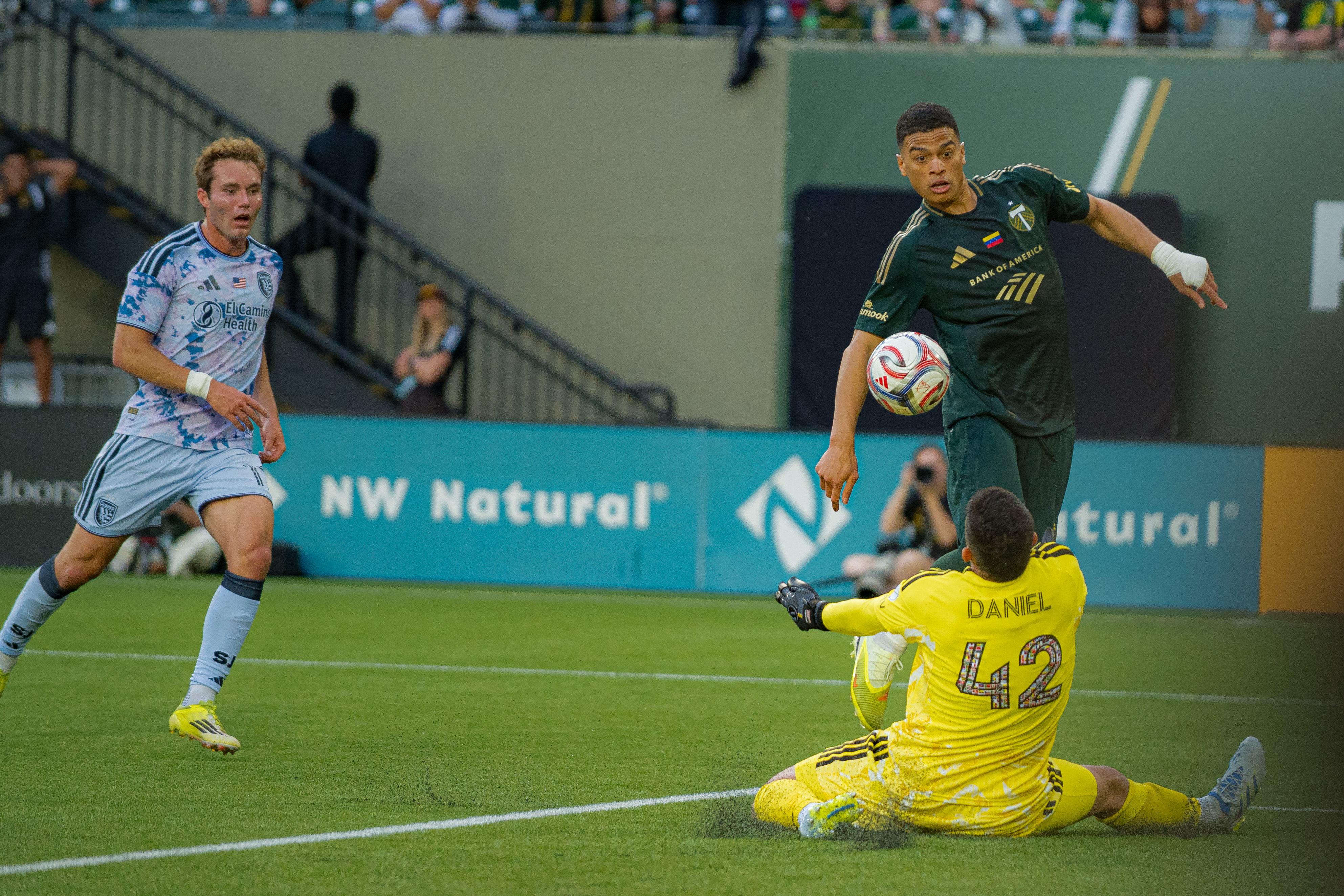
Portland pushed, but Daniel held firm
The second half largely turned into Portland trying to generate sustained pressure while San Jose focused on surviving waves of attacks and finding counter opportunities.
To Portland’s credit, they did create chances.
Brandon Bye forced a save in the 62nd minute. Kevin Kelsy had another dangerous opportunity denied in the 66th. Late in the match, Ian Smith and Ariel Lassiter both forced important saves from San Jose goalkeeper Daniel.
But that was the story of Portland’s night: almost dangerous, almost back in it, almost capable of turning momentum.
Daniel made sure none of those moments became reality.
The San Jose goalkeeper delivered a composed performance in the second half, consistently positioning himself well and preventing Portland from generating the kind of emotional breakthrough goal that could have made the final minutes chaotic.
At the other end, San Jose never stopped threatening on counters.
Ousseni Bouda remained dangerous in space, while Darius Johnson nearly added a fourth late in stoppage time before James Pantemis made the save.
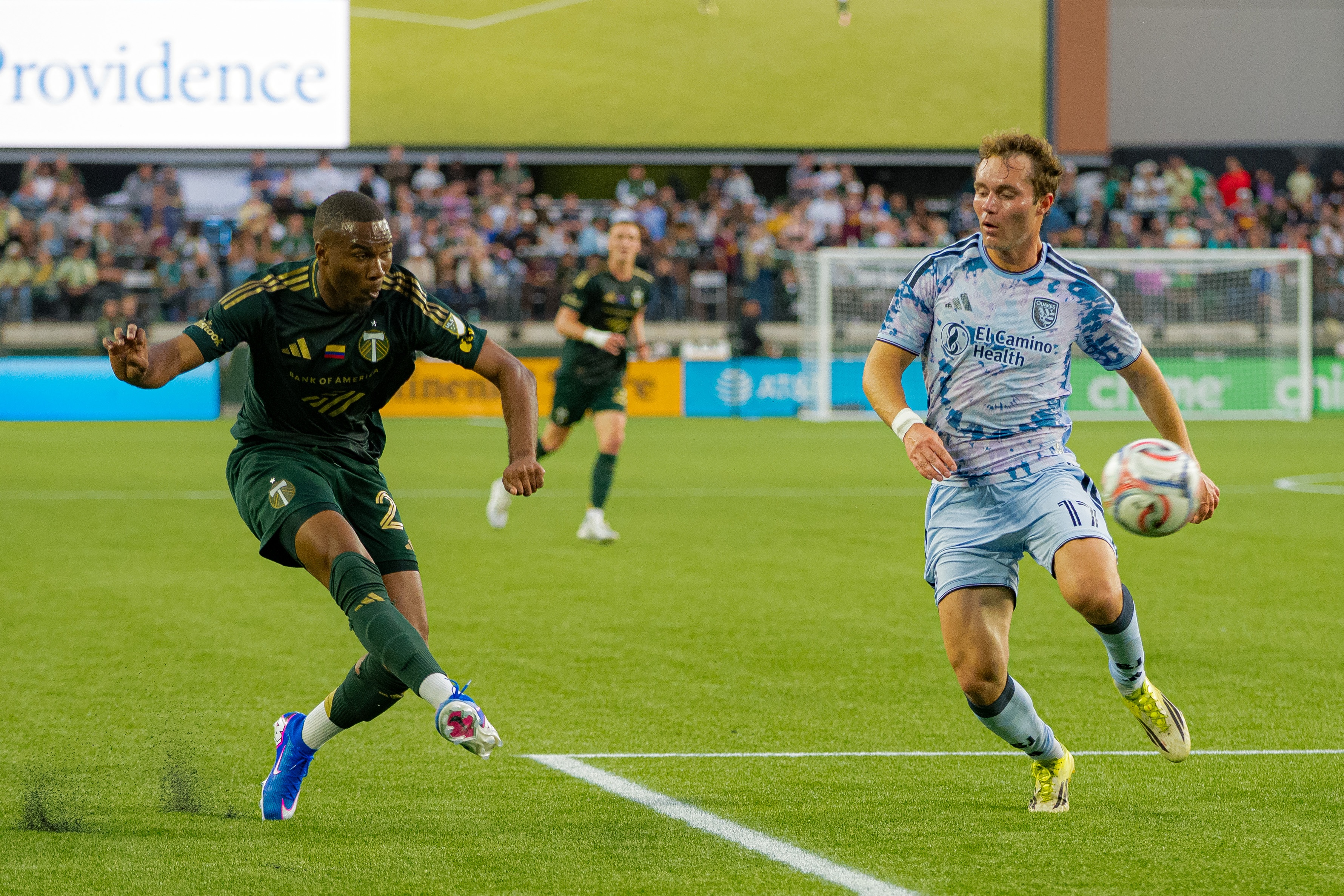
Preston Judd delivered his biggest statement
This match will ultimately be remembered for Preston Judd.
The forward set the tone immediately and gave San Jose exactly what every road team dreams of: early control, confidence, and scoreboard pressure.
More importantly, Judd looked decisive.
Every touch inside dangerous areas carried intent. His movement repeatedly exposed Portland’s defensive shape, and his finishing punished mistakes instantly. Against a Timbers team that has struggled at times defending direct attacks, Judd’s aggression became the defining tactical storyline of the match.
His first-half brace completely changed the rhythm of the night.
For San Jose, that performance could matter beyond just three points.
MLS seasons often swing on confidence. Strikers especially can go from role players to genuine difference-makers with one breakout night. Judd looked like a player who understood the moment and attacked it without hesitation.

Bigger questions now surround Portland
For the Timbers, the concerns are harder to ignore.
Conceding three goals inside 24 minutes at home is not just a bad start. It is structural failure.
Portland looked vulnerable defending quick transitions, struggled tracking runners centrally, and never fully regained defensive control after the opening minutes. Even when they created pressure offensively, the match always felt fragile because San Jose looked capable of generating chances whenever space opened up.
There were still positives offensively. Antony looked dangerous. Da Costa showed flashes as a creator. The attack generated opportunities.
But the defensive issues overshadowed everything.
And in a crowded Western Conference playoff race, nights like this can linger.
San Jose looked like the more complete team
The most impressive thing about San Jose’s performance was not just the scoring burst. It was the maturity afterward.
After going up 3-1, the Earthquakes stayed organized, survived pressure, managed the tempo, and frustrated Portland for long stretches of the second half. That is how good road teams close games.
The Earthquakes did not just steal three points.
They controlled the emotional flow of the match from the opening minutes and never truly gave it back.