Scottie Scheffler Opens FedEx Cup Fall With a Statement Win in Napa
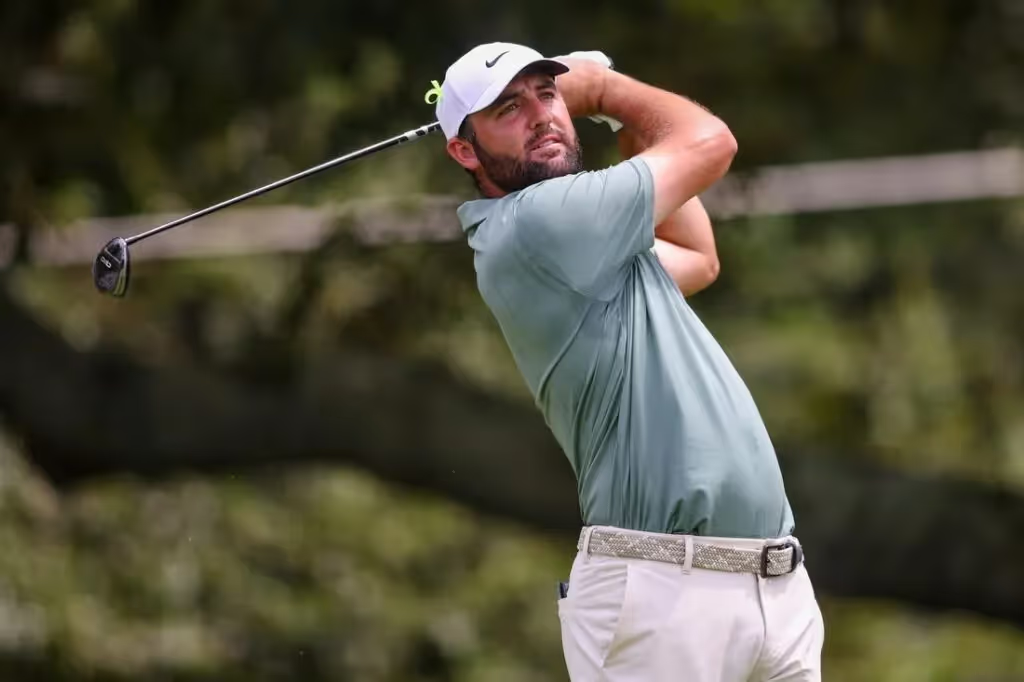

If the PGA Tour’s FedEx Cup Fall needed a tone-setter, Scottie Scheffler was happy to volunteer. Four days in Napa, California, sun baking the fairways at Silverado Resort’s North Course, the world No. 1 did what the world No. 1 tends to do: play clean, controlled, borderline inevitable golf and walk off with another trophy. The Procore Championship, the official kickoff of the FedEx Cup Fall series, ended with Scheffler claiming his 19th PGA Tour victory, a reminder that even when the calendar flips and the stakes subtly shift, the hierarchy at the top of men’s golf remains very much intact.
This wasn’t a coronation. It was more like a calculated takeover. Scheffler didn’t run away with the tournament on Thursday or Friday. He didn’t turn it into a birdie-fest clinic where everyone else was playing for second by the weekend. Instead, he stayed patient, absorbed pressure, and picked his spots until Sunday, when the math became simple: be Scottie Scheffler for 18 holes, and let everyone else blink first.
They did.
A Fall Series Opener That Actually Felt Important
The FedEx Cup Fall has always lived in a strange space on the PGA Tour calendar. For some players, it’s survival mode. For others, it’s opportunity. For a select few at the top, it’s optional—at least in theory. Scheffler showing up in Napa and treating the Procore Championship like a serious competitive stop immediately elevated the week.
Silverado’s North Course rewarded aggression but punished sloppiness, and the leaderboard reflected that balance. Scores went low, but not recklessly low. This wasn’t a point-and-shoot track. It demanded discipline, especially on approach shots and around the greens, where Scheffler quietly separated himself over the course of four rounds.
By the weekend, the tournament had taken shape as a real contest, not a tune-up. And Scheffler, starting Sunday within striking distance rather than out front, leaned into the chase.
How the Tournament Unfolded
Scheffler’s week was a study in momentum management. He didn’t post the flashiest round early, but he never drifted far from the top of the leaderboard. Each round felt intentional. Each scorecard felt like it belonged to someone who knew exactly what was required and refused to do more than that.
Sunday was where the tension finally snapped into focus. Scheffler entered the final round trailing the lead, with multiple players in realistic contention. Early birdies from those ahead of him applied pressure immediately. The course played fair, the conditions were steady, and there were no external excuses available.
Scheffler’s response wasn’t dramatic. It was methodical. Fairways found. Greens hit. Putts dropped when they needed to, and didn’t when they didn’t. Where others pressed, he waited. Where others flirted with big numbers, he settled for pars that felt like small wins.
As the back nine unfolded, the leaderboard compressed. The margin for error shrank. And slowly, predictably, Scheffler moved himself into position to close.
The Defining Stretch
The tournament didn’t hinge on one outrageous shot or a viral moment. It hinged on restraint.
Scheffler navigated the middle of the back nine without forcing birdies that weren’t there, then capitalized when the course finally offered something back. A key birdie late in the round gave him control, and from there, the equation changed. The pressure flipped. Instead of chasing, Scheffler was being chased.
That’s where his value really showed. Down the stretch, he didn’t play like someone trying to win a fall event. He played like someone protecting a lead in a major. Smart lines. Conservative targets. No unnecessary heroics. Just execution.
The final holes became less about brilliance and more about nerve. Scheffler had it. The rest of the field, understandably, felt it slipping.
Scheffler’s Performance, Beyond the Box Score
The headline number matters: 19 PGA Tour wins. That’s a total that puts Scheffler in rare company for a player still very much in his prime. But the deeper takeaway from Napa was how complete his game looked without ever feeling overextended.
He didn’t dominate with just one club. It wasn’t a putting contest win or a driver showcase. It was balanced. His iron play gave him consistent looks. His short game erased the occasional miss. And his decision-making kept big mistakes entirely off the card.
This is the version of Scheffler that frustrates competitors. There’s no obvious weakness to attack. No phase of the game where you think, “If he has an off day there, we’ve got a shot.” He simply doesn’t give much away.
The Field and the Pressure Behind Him
The chasing pack made this a legitimate win, not a ceremonial one. Several players stayed within range deep into Sunday, forcing Scheffler to earn every stroke. Late-round birdie opportunities for his closest challengers created moments where the tournament could have swung with a single putt.
It didn’t.
Missed chances behind him became louder as Scheffler’s pars stacked up. Every hole he survived without damage tightened the screws. That’s often how tournaments are really decided—not by the shots you make, but by the mistakes you never allow.
Why This Win Matters More Than It Looks
On paper, the Procore Championship is a fall event. In reality, it’s a statement about intent.
Scheffler didn’t need this win for status, security, or validation. He needed it for momentum and message. The FedEx Cup Fall exists to reshuffle narratives, to give players outside the elite a chance to climb. Scheffler stepping into that space and immediately winning sends a clear signal: the standard at the top isn’t relaxing just because the season feels like it’s in a quieter phase.
It also reframes the fall swing itself. If the best player in the world is treating these events like they matter, everyone else has to follow suit. The line between “offseason” and “real season” continues to blur.
The Bigger Picture
Scheffler’s win in Napa doesn’t redefine his career. It reinforces it. This is what sustained excellence looks like in modern professional golf: show up, regardless of timing, and compete like every week counts.
For the FedEx Cup Fall, the bar has been set early. For the rest of the field, the message is uncomfortable but clear. If you want to win this series, you may have to go through Scottie Scheffler—even when he doesn’t technically need to be there.
And for golf fans, that’s a good thing. The fall just got a lot more interesting.