Union Held Late in 1–1 Draw With Toronto FC, Remain Top of Supporters’ Shield Race
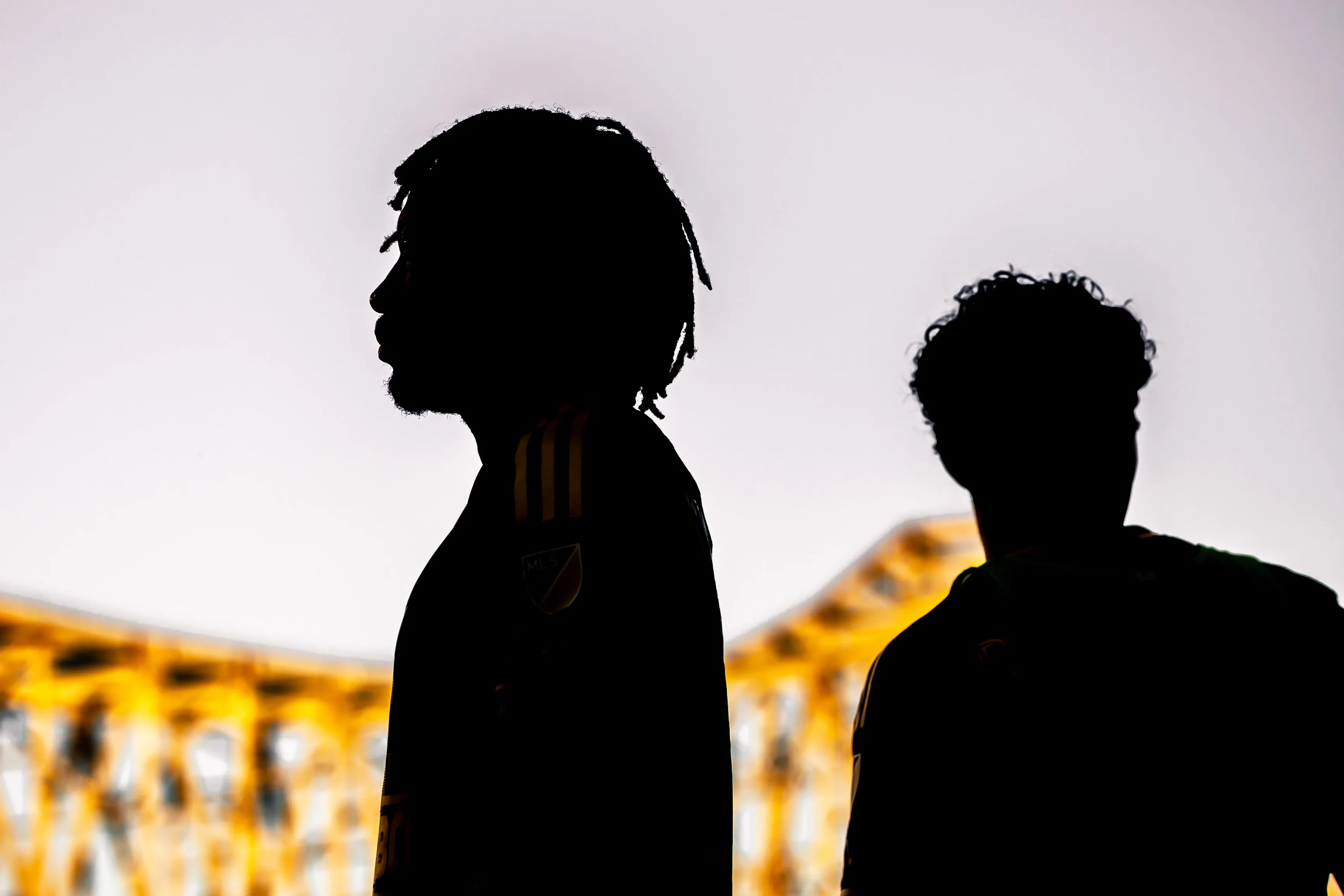

For nearly 90 minutes, this felt like one of those professional, no-drama nights where the Philadelphia Union quietly do their job, protect home turf, and move one step closer to silverware.
And then stoppage time arrived.
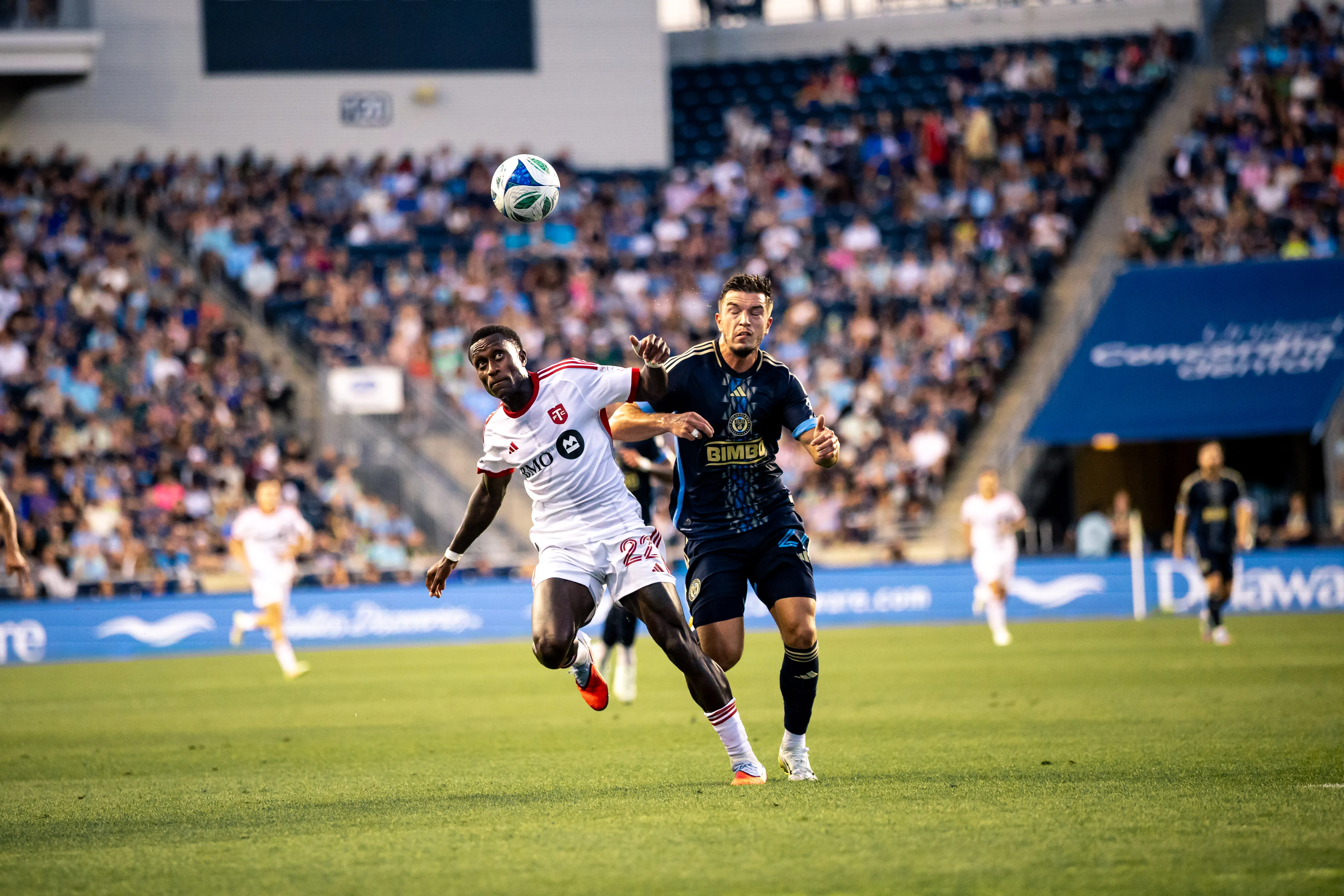
A match the Union controlled from the opening whistle unraveled in a single, brutal moment, as Toronto FC snatched a 90+1’ equalizer to force a 1–1 draw on August 9, leaving Philadelphia with one point, Toronto with a valuable road result, and Subaru Park collectively exhaling in disbelief.
This wasn’t chaos for 90 minutes. It was control — until it wasn’t.
Dream Start: Union Strike Early and Set the Tone
Philadelphia didn’t waste time easing into the match.
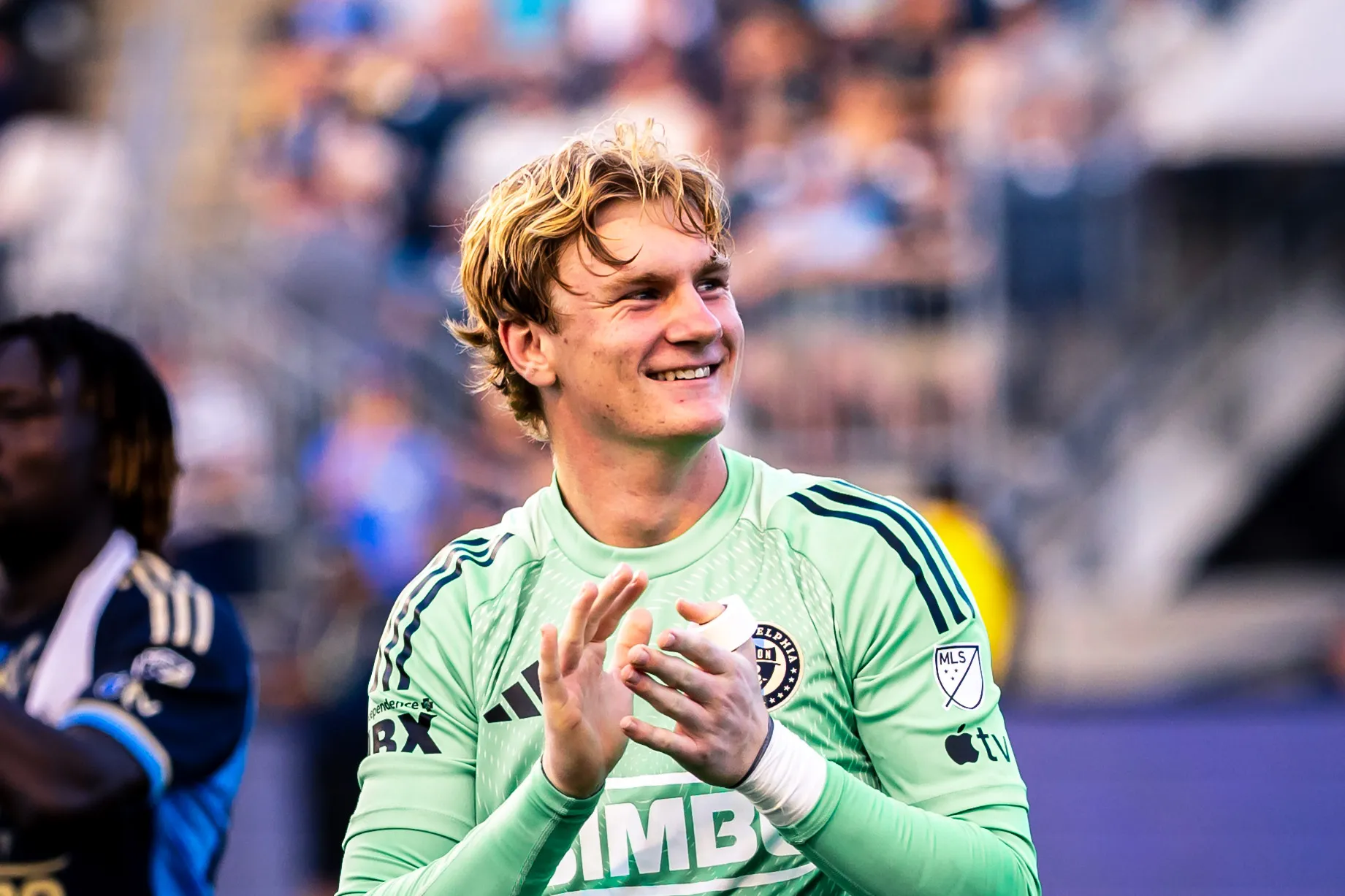
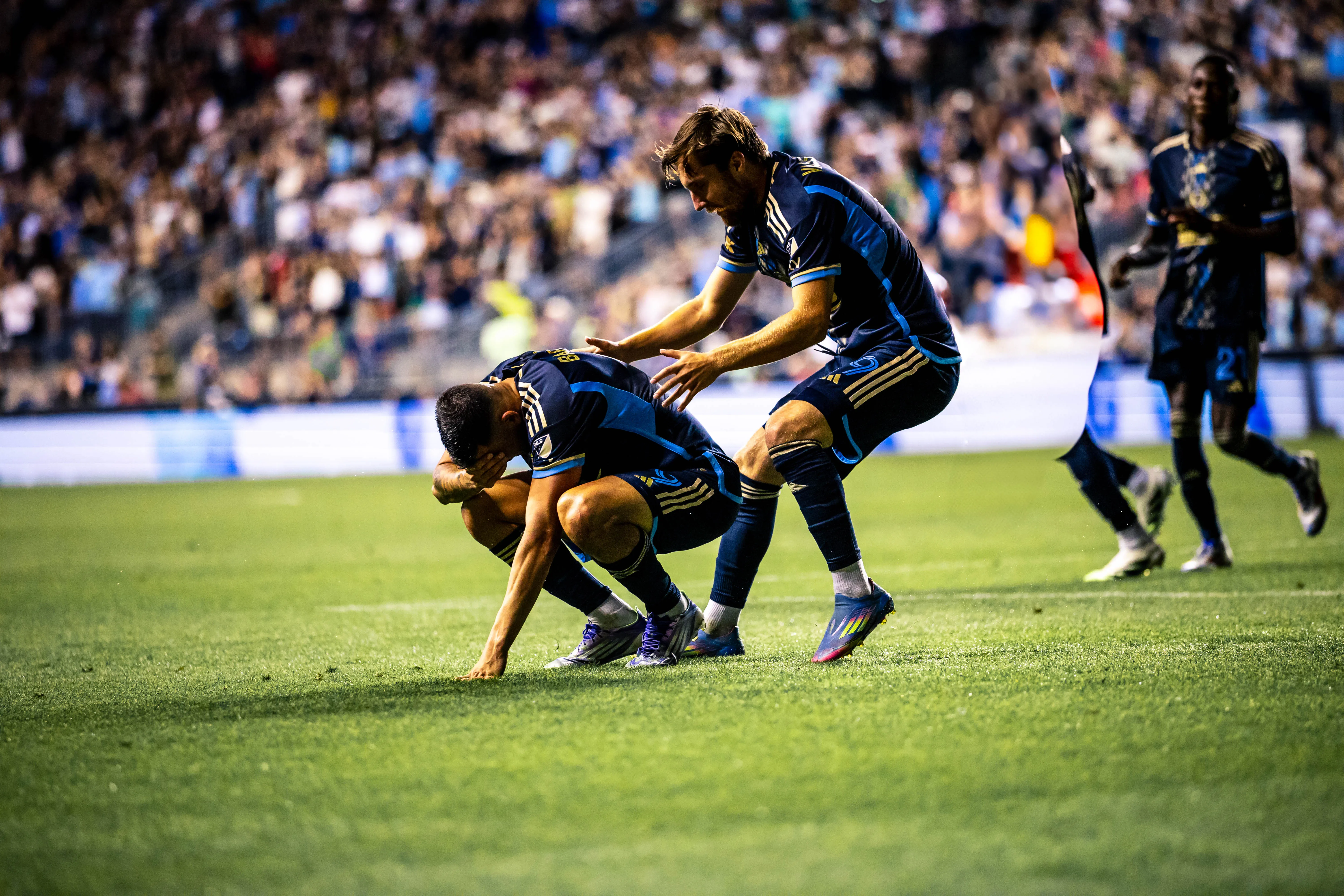
Just four minutes in, Indiana Vassilev finished off a sharp attacking sequence, capitalizing on quick ball movement and an assist from Tai Baribo to give the Union a 1–0 lead before Toronto had fully settled. The goal wasn’t flashy, but it was efficient — the kind of early strike that allows Philly to play exactly the game it wants.
From there, the Union dictated tempo. Possession was purposeful. Defensive spacing was tight. Toronto struggled to find any rhythm through midfield, and for long stretches, the match felt like it was being played on Philadelphia’s terms.
This was the Union in their comfort zone: organized, patient, and quietly suffocating.
Game Management Mode Engaged
With the lead secured early, Philadelphia shifted into control mode.
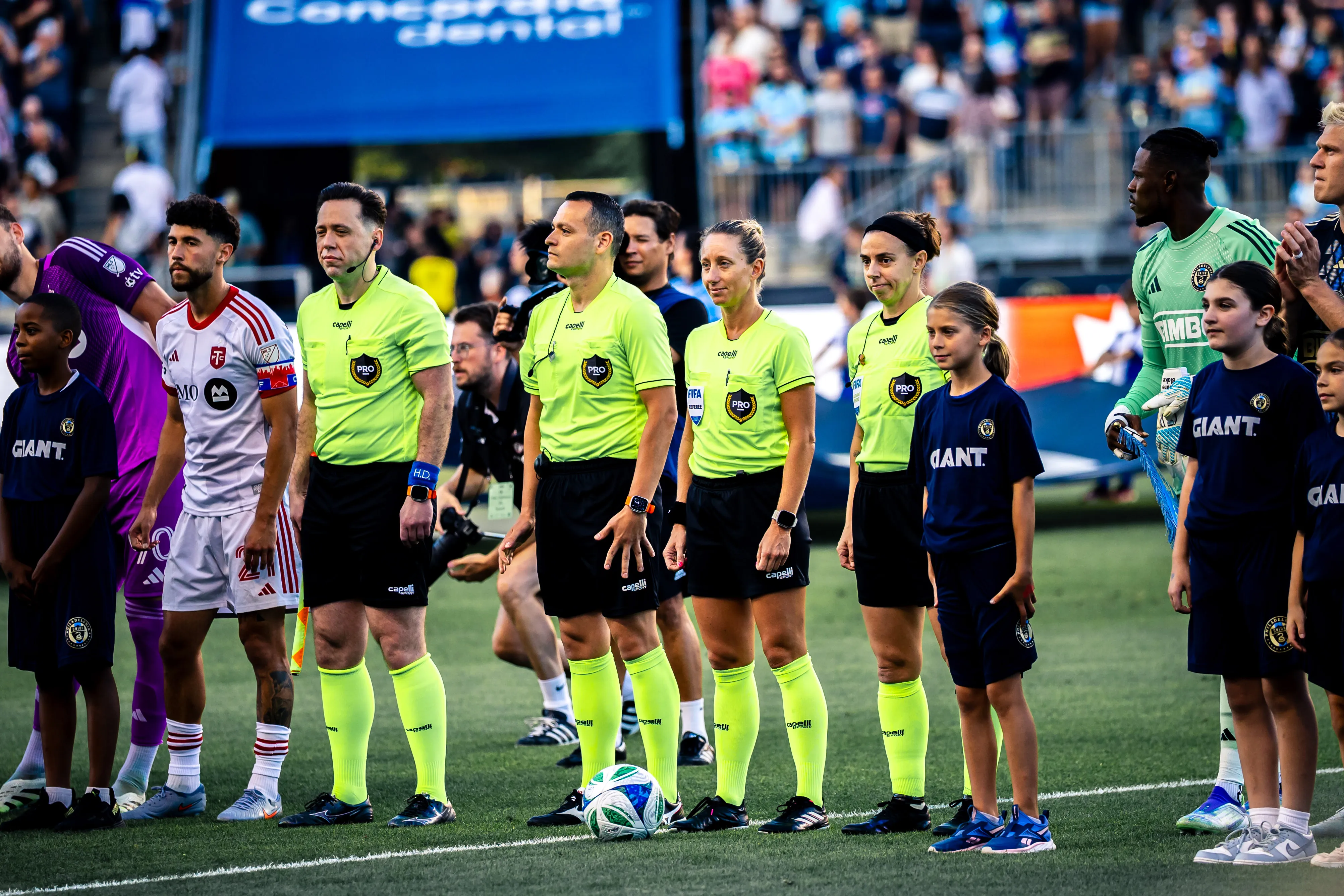
Rather than chasing a second goal recklessly, the Union focused on managing space, limiting Toronto’s transition opportunities, and forcing the visitors into wide areas where danger was minimal. The back line held firm, midfield rotations stayed disciplined, and Toronto’s attacking phases rarely translated into clear looks on goal.
It wasn’t dominant in a highlight-reel sense — but it was effective. The kind of performance that doesn’t grab national attention but usually results in three points by night’s end.
By halftime, Toronto had possession spells, but little bite. Philly had the lead and the flow.
Toronto Pushes, Union Bends
The second half brought a subtle shift.
Toronto began pushing higher up the pitch, committing more numbers forward and testing whether Philadelphia could hold its shape under sustained pressure. The Union were forced deeper at times, absorbing waves rather than controlling territory.
Still, the danger felt manageable. Toronto worked the ball around the box but struggled to carve out truly threatening chances. Philadelphia’s defensive structure bent but never fully cracked — until the clock betrayed them.
This is where the match turned from routine to ruthless.
Stoppage Time Nightmare
With the game entering stoppage time, the Union were seconds away from closing the door.
Instead, Toronto found space — just enough of it.
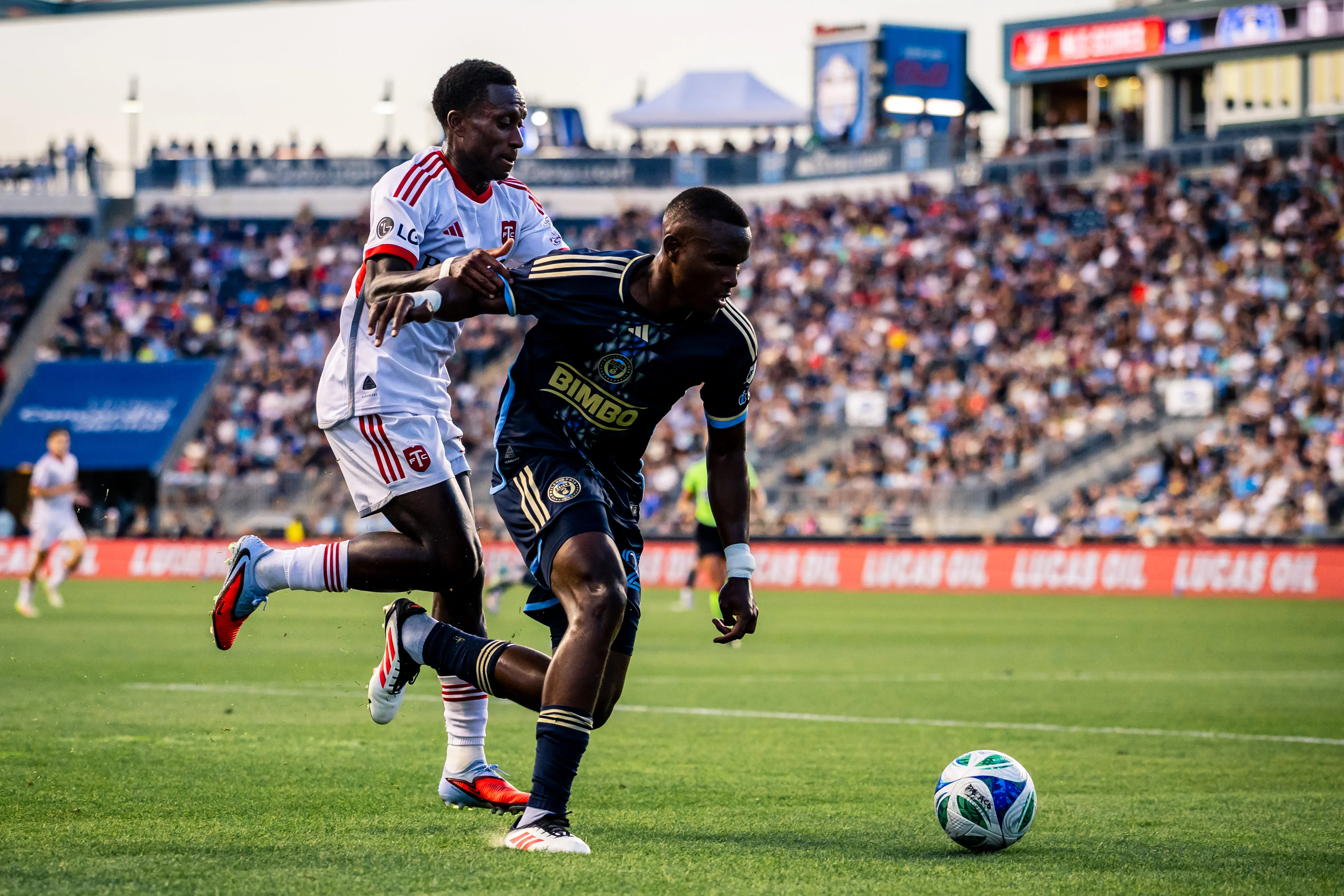
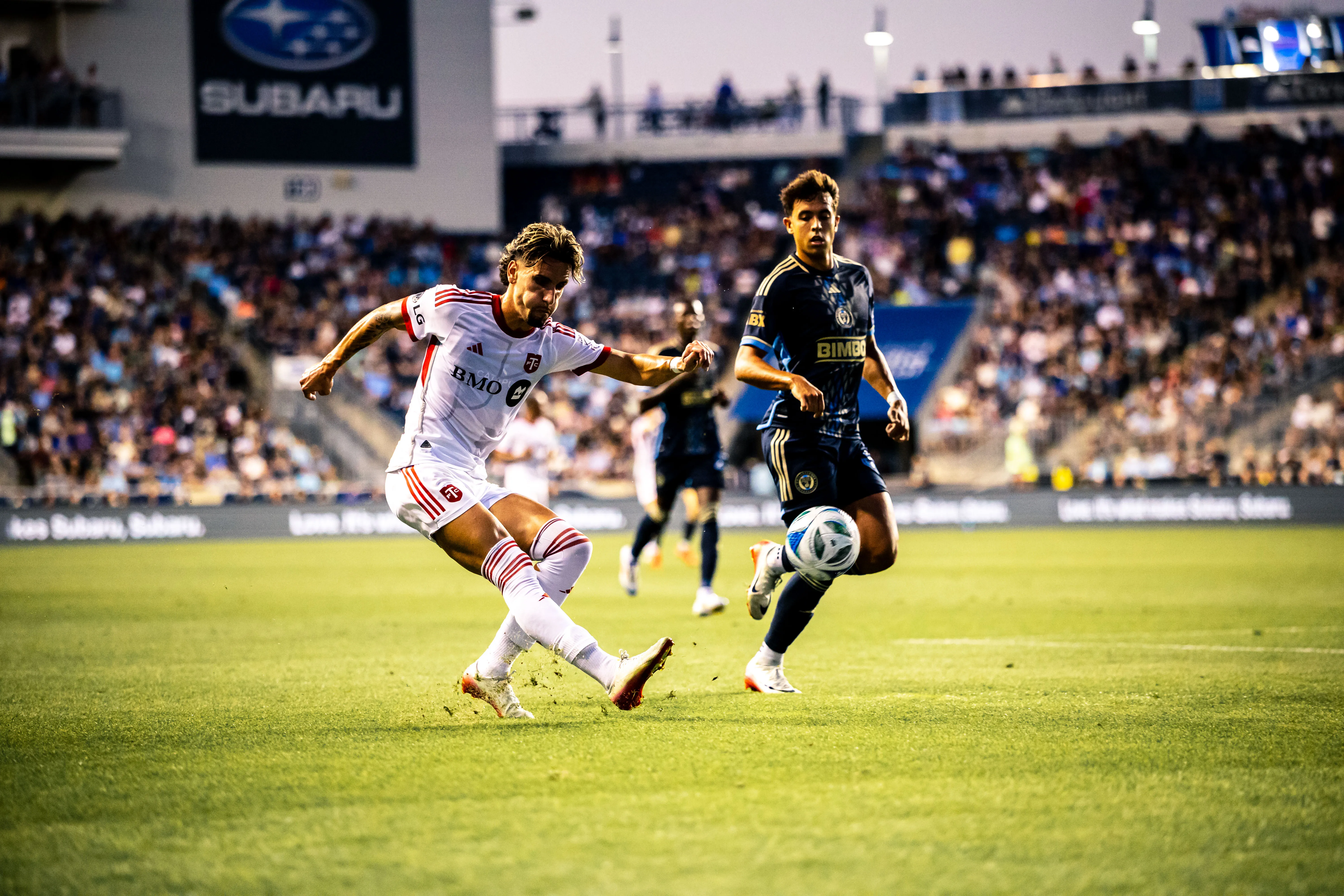
In the 90+1st minute, Deandre Kerr slipped into the box and finished calmly to level the match, capping a sequence that began with Malik Henry and Djordje Mihailovic combining in the buildup. One lapse. One loose moment. One shot that erased nearly an entire match’s worth of control.
1–1.
Toronto celebrated like a team that stole something. Philadelphia stood frozen — not shocked that it happened, but stunned by when it happened.
Debuts and Subplots Beneath the Surface
Beyond the gut punch ending, the match carried some notable individual storylines.
For Toronto, Djordje Mihailovic made his first start, offering composure and creativity in midfield as the visitors searched for answers throughout the second half. His involvement in the buildup to the equalizer was a quiet reminder of why he matters to Toronto’s late-season ambitions.
Philadelphia, meanwhile, introduced Milan Iloski off the bench, adding another developmental layer to a team balancing a Supporters’ Shield chase with squad rotation and depth building.
These weren’t headline moments — but in August MLS matches, they matter.
What Decided the Match
This game wasn’t lost because Philadelphia played poorly.
It was decided by timing and margin.
The Union controlled tempo, limited chances, and dictated the flow for long stretches. But MLS has a habit of punishing teams that don’t put games away, and Toronto needed only one clean look — one defensive miscue — to flip the narrative.
In a league where games swing late and chaos lives in stoppage time, game management isn’t just about possession. It’s about closing moments.
Toronto survived long enough to steal one.
Stats That Actually Matter
- Philadelphia scored in the 4th minute and led for nearly the entire match
- Toronto’s equalizer came in 90+1’, their first true breakthrough moment
- Despite the draw, the Union remained atop the Supporters’ Shield standings
- Toronto earned a valuable road point, critical in a tight playoff race
No stat sheet will fully capture how controlled this match felt — until it didn’t.
What It Means Going Forward
For Philadelphia, the result is frustrating but not damaging.
A draw keeps them in first place in the Supporters’ Shield race, but it also serves as a reminder that margins shrink late in the season. Matches you dominate on paper still demand ruthless execution until the final whistle.
For Toronto, this is a result that feels bigger than a single point. Road draws in MLS — especially against top teams — add up quickly. This one reinforces belief, resilience, and the idea that games are never truly gone.
Final Take
The Union didn’t collapse. They blinked.
And in MLS, blinking at the wrong moment can cost you everything.
Philadelphia controlled this match from the opening minutes, got the early goal they wanted, and managed the game like a team chasing trophies — until stoppage time flipped the script. Toronto stayed patient, survived the pressure, and capitalized on the one moment that mattered.
One point each. Two very different emotions.
For Philly, it’s a reminder to finish the job.
For Toronto, it’s proof that persistence still pays.
And for everyone watching? A classic MLS lesson: the final whistle is undefeated.