Statement Win: How the USMNT's 5-1 Demolition of Uruguay Turned the Program's 2025 Narrative Around

The Four-Goal First Half That Changed Everything
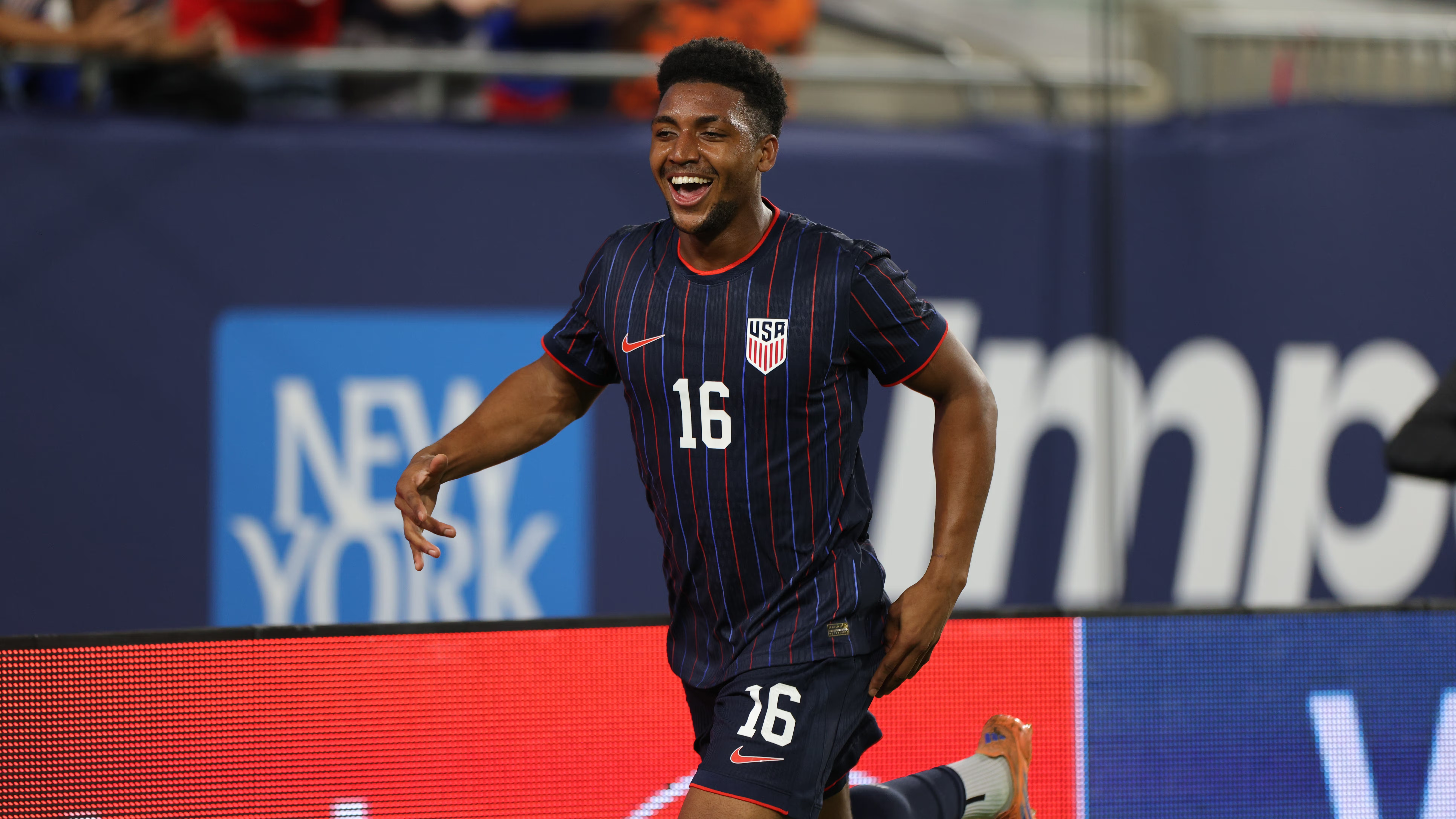
Whatever lingering anxiety followed the USMNT into Raymond James Stadium on November 18, 2025 — the losses to South Korea and Panama, the Nations League semifinal disappointment, the Gold Cup final defeat — the first 42 minutes of this match against 15th-ranked Uruguay dissolved all of it. Four goals. Four first-half goals against a South American side that had won its previous six matches and featured Ronald Araujo, Mathias Olivera, Manuel Ugarte, and Rodrigo Bentancur in its starting lineup. It was the kind of performance that doesn’t just win a game. It shifts a narrative.
Sebastian Berhalter’s curling free kick in the 17th minute set the tone. Not a tap-in, not a lucky deflection — a legitimate worldie from a player making an emphatic case for his place in the World Cup conversation. Alex Freeman’s goal in the 20th minute followed. Diego Luna scored in the 42nd. By halftime, the United States led 4-1, and the 26,110 fans inside Raymond James Stadium were watching something they hadn’t seen from this program in years: completely convincing, clinical, joyful soccer against an opponent of genuine quality.
The Records That Fell
The 5-1 final scoreline was historic in multiple directions. It was the first time the USMNT had scored five goals against a CONMEBOL opponent. It tied the program’s record for largest margin of victory against a team ranked in the FIFA top 15 — the only other comparable result being a 4-0 win over No. 7 Mexico in 1995. Tanner Tessmann’s 68th-minute header, assisted by Gio Reyna off a short corner, completed the rout and gave three more players their first international goals in the same match.
Freeman, Berhalter, and Tessmann all opened their international accounts on the same night. For a program that has spent years searching for depth beyond its European starters, seeing that kind of breakthrough from emerging players against a World Cup-qualified opponent is exactly the development signal Pochettino needed heading into the final months of preparation.
The Gio Reyna Subplot
One of the quietest but most significant elements of November’s window was the return of Gio Reyna. After a prolonged absence from the national team program that included injury and a complicated relationship with the previous coaching setup, Reyna’s appearances in both November matches signaled a genuine reintegration. His assist for Tessmann’s goal showed exactly the kind of creative quality that Pochettino’s high press system can maximize. The Reyna question — whether he could get healthy and motivated enough to contribute at the World Cup level — got a meaningful answer in Tampa.
What Five Unbeaten Against World Cup Teams Means
The Uruguay win capped a five-match unbeaten run (4W-1D) against teams already qualified for the 2026 World Cup. That streak included wins over Japan, Australia, Paraguay, and Uruguay — a draw with Ecuador. The USMNT hadn’t gone unbeaten in five consecutive matches against FIFA top-40 opponents since 2013. As a momentum indicator, it was the strongest signal the program had sent all year that the tactical work under Pochettino was beginning to produce consistent results.
The caveat is real: friendlies against World Cup opponents who were rotating squads or not at full strength are not the same as the pressure of a World Cup knockout match. But the data still matters. Confidence matters. Systems that work under pressure in friendlies are more likely to work in June. The November window built genuine belief.
Why This Matters for the USMNT Going Forward
The 5-1 win over Uruguay closed 2025 on the highest possible note. The program finished the year with a 10W-6L-2D record, including an 8-2-2 record over the final 12 matches. Pochettino arrived to a program in crisis after the Copa América disaster. He leaves 2025 with a team that just dismantled a World Cup-qualified South American side on television in Tampa, with first international goals flying in from unexpected sources and the No. 1 ranking in CONCACAF. The World Cup is six months away. The building is happening. The question now is whether it’s happening fast enough.