Turner vs. Freese: The USMNT Goalkeeper Debate That the World Cup Will Settle

The Question Pochettino Has to Answer
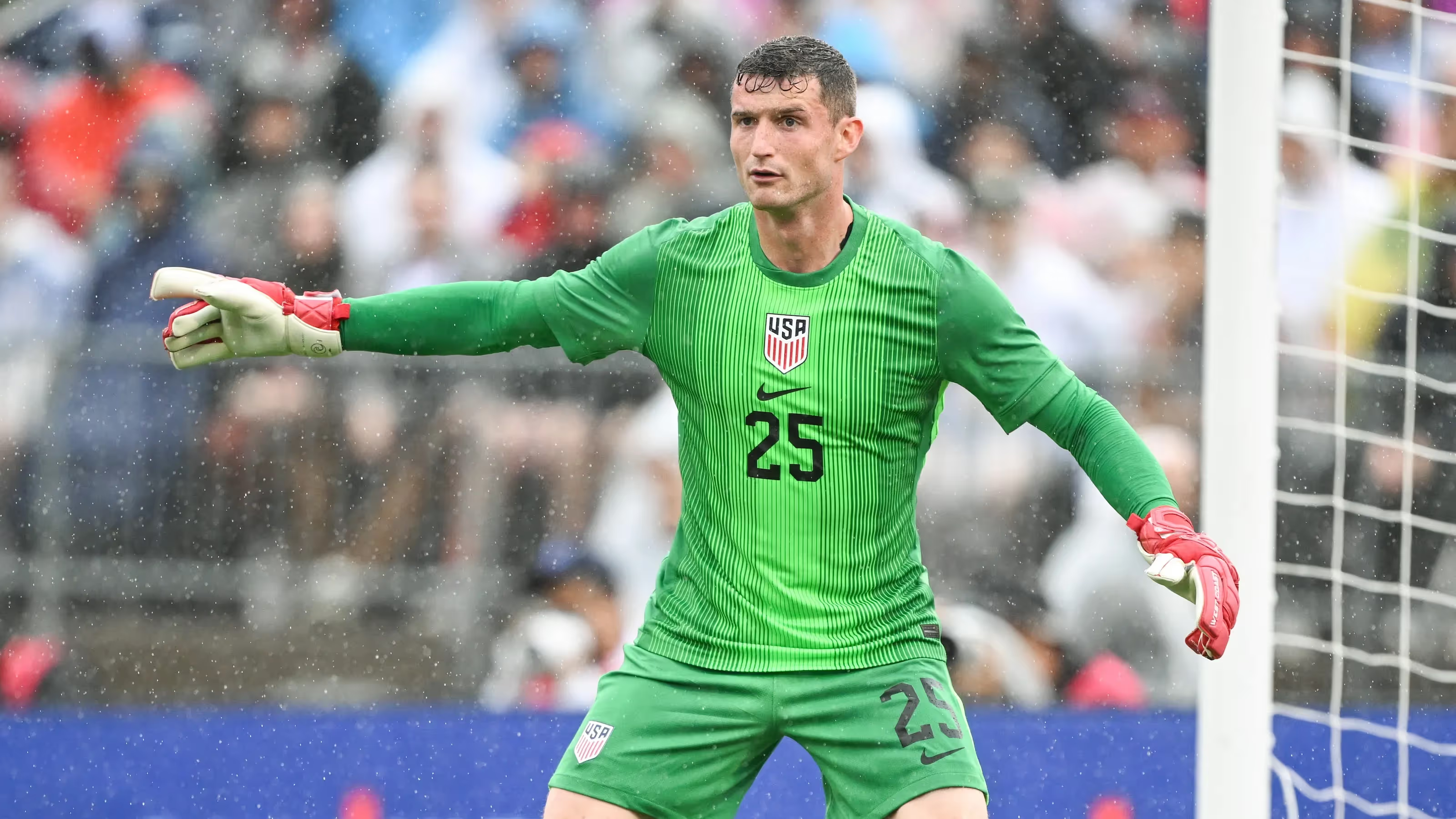
The most consequential roster decision Mauricio Pochettino made for the 2026 World Cup wasn’t which striker to include or whether to bring Diego Luna despite his injury. It was the goalkeeper. Matt Turner, the USMNT’s established No. 1 with 53 caps, entered the March window with a cloud over his name after limited playing time at Crystal Palace had raised persistent questions about his sharpness. Matt Freese, the New York City FC keeper who delivered standout performances during the 2025 Gold Cup’s knockout rounds, was knocking on the door loud enough that everyone could hear it.
Belgium answered the question in the harshest possible way. Turner started. Turner was beaten five times. Three of those goals came from situations where his positioning was questioned by analysts. Pochettino started Freese three days later against Portugal. Freese was excellent — beaten twice by moments of genuine quality from Trincão and Félix, but blameless on both — and looked like a goalkeeper operating at peak confidence and match fitness. The debate, which had been theoretical for months, became undeniable over 180 minutes in Atlanta.
The Case for Turner
Turner’s argument is rooted in experience and track record. His 53 caps represent more World Cup experience, more high-pressure international moments, and more institutional knowledge of the USMNT’s system than Freese can offer. His performances at the 2022 World Cup were solid — he kept the team in several matches and didn’t make the kind of errors that cost results at the tournament level. There is also a genuine school of thought in international football that you go into a major tournament with your experienced goalkeeper regardless of recent form, because the psychological demands of tournament play are different from friendly performances.
Against Panama in the Nations League, Turner conceded Waterman’s shot to the far post — a goal that ended the USMNT’s dynasty in the competition. The positioning on that shot was questioned. Against Belgium, his second-half positioning was questioned repeatedly. The pattern is a concern. But patterns in friendlies and patterns in tournament football are not the same thing, and Turner’s advocates would argue the former doesn’t predict the latter.
The Case for Freese
Freese’s argument is rooted in form, confidence, and recent evidence. He plays every week at NYCFC. He was the best goalkeeper on the field at multiple Gold Cup matches in July 2025. His penalty shootout heroics in the knockout rounds demonstrated the kind of composure under pressure that goalkeepers build through consistent playing time and that erodes without it. Against Portugal, he looked like a goalkeeper who trusted himself completely. Turner’s recent Crystal Palace situation had not provided that kind of consistent match reps.
The statistical case for Freese in the March window was clear. His save rate against Portugal was excellent. His handling was reliable. His decision-making was sharp. These are the fundamentals that World Cup goalkeeping demands, and Freese delivered all of them in the last meaningful evaluation opportunity before the roster announcement.
The Decision and Its Implications
Pochettino’s World Cup roster included both Turner and Freese, with a third goalkeeper rounding out the group. The starting choice for the Paraguay opener will be one of the most scrutinized team selections in recent USMNT history. Whoever starts against Paraguay on June 12 at SoFi Stadium will carry the weight of a nation’s World Cup hopes through every cross they claim, every shot they face, and every decision they make in 90 minutes of high-pressure tournament football.
Why This Matters for the USMNT Going Forward
The goalkeeper debate is ultimately a question about whether the United States values experience over form, stability over momentum. Both qualities matter at World Cups. What Pochettino decides will tell us something about how he’s reading this team’s needs in the weeks leading up to June 12. The answer will either vindicate his judgment or become the first thing critics point to if the tournament goes wrong. It’s that important.