Gold Cup Breakout Stars: The Players Who Forced Their Way Into USMNT World Cup Conversations

An Unlikely Summer
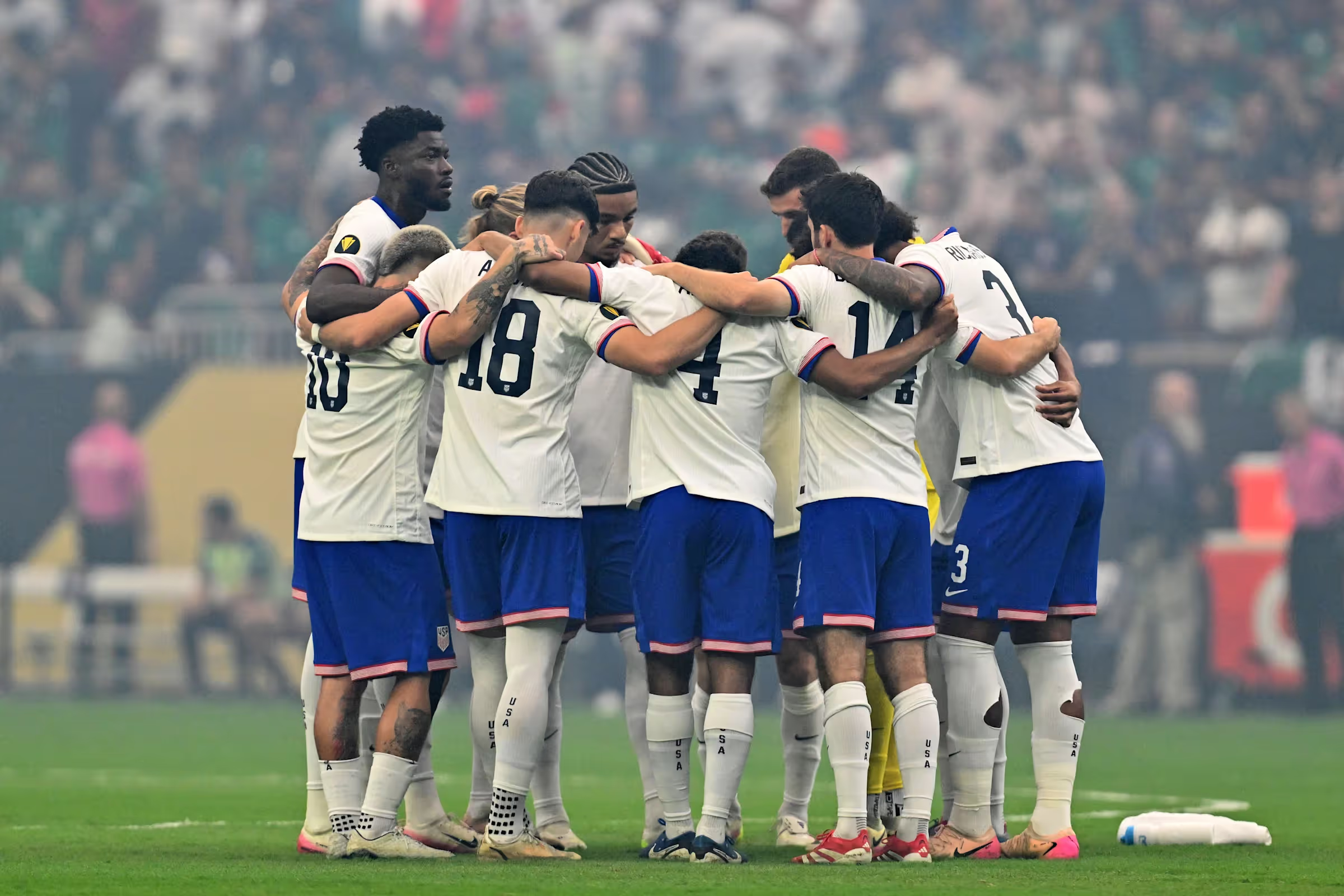
The 2025 CONCACAF Gold Cup was supposed to be a secondary event. Without Christian Pulisic, Yunus Musah, and a handful of other regulars, many observers expected Mauricio Pochettino to simply use the tournament to keep fringe players sharp and see what he had in the lower tier of his player pool. What happened instead was a summer that identified five legitimate contributors to the 2026 World Cup squad and changed the conversations around each of them permanently.
That's the beauty of a tournament like the Gold Cup when the big names sit out: someone always steps up. In 2025, several someones did.
Chris Richards: The Quiet Leader Who Made It Loud
If there was one player who walked out of the 2025 Gold Cup with an unambiguous case for a starting role at the World Cup, it was Chris Richards. The Crystal Palace center back was outstanding from the first match to the final, combining aerial dominance with composed distribution and an ability to read attacking patterns that made the entire defensive structure function better when he was on the field.
Richards scored twice in the tournament — including the fourth-minute opener in the final against Mexico — and demonstrated exactly the kind of big-match quality that the USMNT needs from its central defenders when the pressure is highest. His communication, his leadership on set pieces both defensively and as an attacking threat, and his consistency across seven matches over a month-long tournament all point to a player who has matured into something genuinely valuable. For a program that has cycled through central defensive options, Richards looked unmovable by the end of the summer.
Diego Luna: The Bleach-Blonde Revelation
Diego Luna arrived at the Gold Cup with a reputation as a promising Real Salt Lake midfielder. He left as the tournament's most talked-about American. The young midfielder — whose bleach-blonde hair became as recognizable as his technical quality during the tournament — played with a creativity and composure that defied his age and experience level. His ability to receive under pressure, turn in tight spaces, and play passes that opened defenses was a consistent feature of every match he appeared in.
Luna finished the tournament with significant goal and assist contributions and established himself as Pochettino's most trusted link between the midfield and the attack. The conversation around him shifted entirely during those weeks: from "promising prospect worth monitoring" to "should this player be on the World Cup roster?" His subsequent knee injury in the early MLS season created real heartbreak, but his Gold Cup performances guaranteed that the broader conversation about his future with the national team was not going away.
Malik Tillman: The Late Arrival Who Made His Case
Malik Tillman's path to USMNT relevance was unconventional — born in Germany to an American father, he represented Germany at youth levels before switching allegiance to the United States. His Gold Cup performances were the fullest realization yet of why that decision mattered for the program. Playing primarily as a creative attacking midfielder, Tillman combined technical precision with intelligent movement and a composure in front of goal that exceeded what his national team experience suggested.
Reports during the tournament indicated that Tillman would be moving to Bayer Leverkusen from PSV Eindhoven — a genuine step up in club competition that further enhanced the case for his inclusion at senior level. By the Gold Cup's conclusion, Tillman had secured himself a position in the World Cup conversation that wasn't seriously in question a month earlier. His nomination for USMNT Player of the Year in 2025 reflected how dramatically his stock had risen.
Matt Freese: Penalty Shootout Hero and Goalkeeper Debate Igniter
When the goalkeeper debate for the 2026 World Cup is written up, the 2025 Gold Cup will be cited as the moment the competition genuinely opened. Matt Freese, the New York City FC keeper who had been a consistent call-up without establishing himself as the clear backup to Matt Turner, delivered tournament performances that made the "who starts in goal" conversation significantly more interesting.
Freese's penalty shootout heroics in the knockout rounds were the kind of moment that builds reputations. Shot-stopping in pressure situations is a different skill set than regular match performance, and Freese showed he had it in abundance. His inclusion in the final World Cup roster was a direct consequence of what he did during those weeks in the summer of 2025.
Alex Freeman: The Right Back Who Raised His Hand
Alex Freeman entered the Gold Cup as an option. He left as a documented contributor. The Orlando City right back took advantage of his extended run in the lineup to show the kind of defensive reliability and forward-thinking energy that the USMNT needs from its wide defenders. His performances were not without blemish — the Gold Cup exposed some vulnerabilities in his positioning against higher-quality opponents — but the volume of quality work he produced across the tournament was enough to solidify his place in the first-team conversation.
Why This Matters for the USMNT Going Forward
The 2025 Gold Cup produced the player identification that every tournament without the regulars is supposed to generate. Richards, Luna, Tillman, Freese, and Freeman all made Pochettino's World Cup decisions harder and more interesting. That's the best possible outcome from a summer that could have been a forgettable interlude. Instead, it was a genuine contribution to the 2026 project.