26 and Ready: Breaking Down the USMNT's Official 2026 World Cup Roster

The Wait Is Over
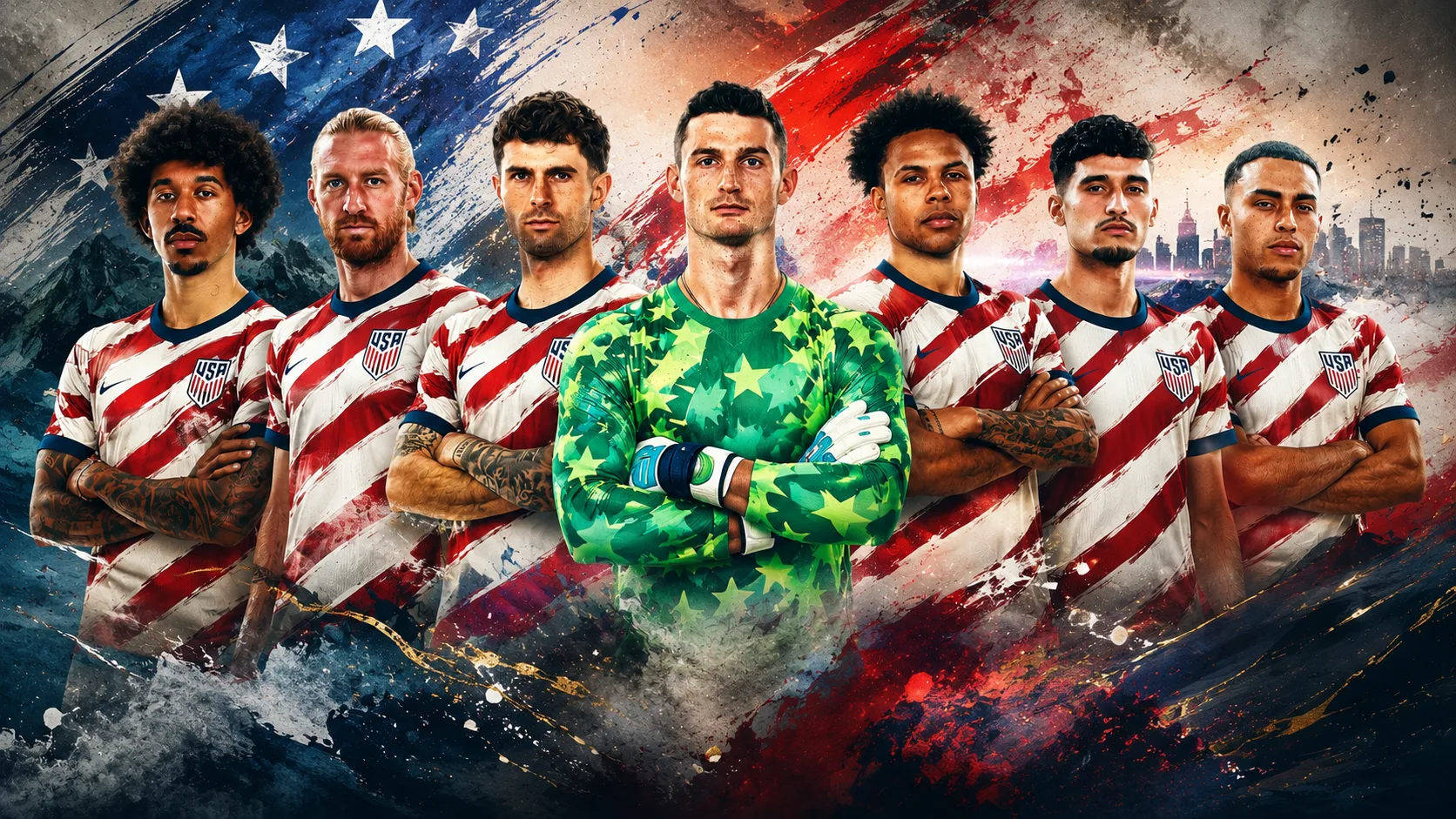
On May 26, 2026, Mauricio Pochettino stood in front of cameras in New York City and revealed the 26 players who will represent the United States at the FIFA World Cup — the tournament being played, for the first time in program history, on home soil. After months of roster speculation, injury scares, and debates about who deserved to be in and who deserved to be left out, the list is now official. These are the 26 men tasked with carrying the weight of American soccer's biggest moment.
The announcement was broadcast live on FOX, complete with the kind of production value that signals how seriously the country is starting to take its national soccer team. The squad's average age at the start of the tournament is 26 years and 332 days — the fifth youngest in program history. Thirteen players from the 2022 World Cup squad are on the list. The blend of experience and youth is intentional and, depending on how the tournament unfolds, potentially historic.
The Headliners
Christian Pulisic leads the group with 84 caps, the most of any player on the roster. That number represents every match Pulisic has played through injury, through transfer speculation, through AC Milan's up-and-down seasons, and through the growing pains of a USMNT program still finding its identity. His experience at the 2022 World Cup — where he contributed a goal and two assists, becoming one of only four USMNT players in history to produce three or more goal contributions in a single tournament — makes him the benchmark against which this squad's performance will ultimately be measured.
Tim Ream follows with 80 caps, Tyler Adams with 52, Antonee Robinson with 52, Weston McKennie with 64, and Brenden Aaronson with 57. These are the veterans, the players who've been on the big stages before, who know what a World Cup penalty shootout feels like, who understand that the difference between advancing and going home often comes down to mental composure in moments that define careers.
The Notable Inclusions
Gio Reyna's name on this roster is a genuine feel-good story. Reyna, who struggled through injuries and a complicated public situation during the 2022 World Cup cycle, made a long-awaited return to the national team in November 2025 and responded with a performance that reminded observers why he was once considered one of the most exciting American soccer prospects in a generation. Pochettino reportedly valued his technical quality and his ability to play in the high press system the USMNT has been developing.
Alex Zendejas is the most intriguing inclusion, a player who represents something genuinely new for the USMNT. The Chicago Fire academy product who plays in Mexico's Liga MX offers a different profile than the European-based players who dominate the roster. His inclusion signals that Pochettino is selecting on merit and tactical fit rather than club prestige alone.
Haji Wright made it through after a period where injuries and inconsistent form created real uncertainty about his World Cup status. His ability to hold up play and combine in the final third gives Pochettino an option off the bench that changes the texture of matches. Matt Freese's inclusion as the backup goalkeeper reflects the performances he delivered during the Gold Cup, where his shootout heroics made a compelling case for his value to the group.
The Notable Exclusions
Diego Luna was perhaps the most discussed absence. The RSL midfielder had been one of Pochettino's most trusted tools throughout 2025, appearing in all but one of 18 matches and finishing second on the team in goals and tied for second in assists. A knee injury that sidelined him early in the 2026 MLS season, followed by a muscle problem in the weeks leading up to selection, ultimately sealed his fate. Pochettino's process reportedly considered fitness above all else in the final selections.
Tanner Tessmann's exclusion was another significant decision. The Olympique Lyonnais midfielder had been seen as a prime candidate to partner Tyler Adams in the defensive midfield, but a muscular injury shut him down several weeks before the announcement and his recovery timeline was too uncertain to justify the roster spot. The same injury logic applied to Johnny Cardoso and Patrick Agyemang.
The Formation and Tactical Identity
Pochettino has settled on a 3-4-3 as his preferred framework, a shift from the 4-2-3-1 that defined the Berhalter era. The back three allows for more flexibility in how the fullbacks operate, giving Robinson in particular the freedom to push forward and create overloads wide. The midfield two — Adams and McKennie in the most common configuration — provides the defensive cover and transition quality that the system requires. Up front, the three-attacker setup creates space for Pulisic to operate in the pockets between lines where he's most dangerous.
The tactical evolution under Pochettino has been gradual but genuine. The 5-1 rout of Uruguay in November 2025 was the single result that most clearly demonstrated what this USMNT can look like when everything is working: compact in defense, explosive in transition, and clinical in front of goal. Whether that version of the team shows up consistently in June and July is the central question.
The World Cup Path
The USMNT opens Group D against Paraguay on June 12 in Los Angeles. The team will play all of its group stage matches on American soil, which represents an enormous home-field advantage in terms of crowd support, travel logistics, and familiarity with the stadiums and conditions. If the group stage goes according to expectation, the knockout rounds will bring increasingly difficult opponents — and the draw will ultimately determine how realistic a deep run truly is.
Why This Matters for the USMNT
This roster announcement is the end of a two-year building process and the beginning of the USMNT's most consequential month in a generation. Twenty-six players, one tournament, one chance to prove that everything that's been built since the Copa América disaster was worth it. The eyes of American sports — and much of the world — will be watching. These are the 26 men carrying that weight.