Who Didn’t Make It: The Toughest USMNT World Cup Roster Cuts

The Phone Calls Nobody Wants to Make
Mauricio Pochettino said he doesn’t call players who don’t make the roster. He said he understands the pain of being left out because he experienced it himself as a player — he waited ten years to make a World Cup roster. He said he cares about the human beings involved. And then he made the decisions that left a group of talented players watching June’s tournament from home. Those decisions reveal as much about what Pochettino values as the selections themselves.
The roster cuts from the 2026 World Cup squad include some of the most discussed names in American soccer over the past two years. Here’s an honest assessment of the toughest calls and what they mean.
Diego Luna: The Injury That Decided Everything
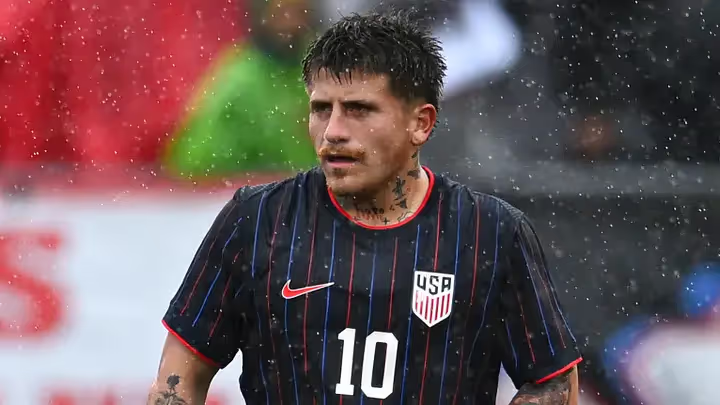
Luna was not cut because Pochettino didn’t value him. He was cut because two separate injury setbacks — a knee issue early in the 2026 MLS season followed by a muscle problem in the weeks before the announcement — made his fitness level uncertain enough that including him carried risk Pochettino wasn’t willing to absorb at a World Cup. Luna had been one of the most consistent performers of the entire Pochettino era, appearing in all but one of 18 matches in 2025 and finishing second on the team in goals and tied for second in assists. His absence is genuinely painful. The timing was just wrong.
Tanner Tessmann: The Muscular Injury That Closed the Door
Tessmann was widely considered a frontrunner to partner Tyler Adams in the double-pivot. His scoring debut against Uruguay in November had elevated his profile significantly. But a muscular injury that emerged several weeks before the announcement made his fitness timeline too uncertain. Pochettino specifically confirmed that injury situations had a significant impact on the final selections. Tessmann, like Luna and Johnny Cardoso, was a victim of timing rather than a statement about quality.
The Other Calls Worth Noting
Aidan Morris had been in the frame for a midfield spot and delivered solid performances throughout his USMNT career without ever quite producing the moment that made him undeniable. His omission was quiet but reflected a preference for Pochettino’s established central midfield options. Ricardo Pepi’s complicated scoring record at national team level ultimately tilted the striker selections toward Balogun, Wright, and the players Pochettino had seen in the most recent evaluation windows. Gio Reyna’s inclusion over other creative options was clearly a faith-based decision by Pochettino, who seemed to see something in Reyna’s November return that overrode the question marks about his recent form.
What the Cuts Say About Pochettino’s Philosophy
The dominant theme of the final roster decisions was fitness. Pochettino took no risks on players who had injury uncertainty. The players who made the squad were fit and available. The players who didn’t make it — Luna, Tessmann, Cardoso, Agyemang — were all dealing with physical problems that created uncertainty. That’s a philosophy of practical construction rather than sentimental selection. It’s also a defensible one: in a tournament format where any injury to a key player can destabilize an entire system, starting with a fully healthy squad is a rational baseline.
Why This Matters for the USMNT Going Forward
The World Cup cuts are always painful, and this year’s were particularly so because several of the players left out — especially Luna — had earned their spots through months of genuine contribution. The 2026 cycle will be remembered for the emergence of a new generation of contributors who weren’t household names two years ago. Some of those players made the roster. Some didn’t. All of them have made the American soccer conversation richer and more interesting than it was before Pochettino arrived.