Hoosiers Turn Peach Bowl Into a Rout, Drop 56 and March to First-Ever National Title Game
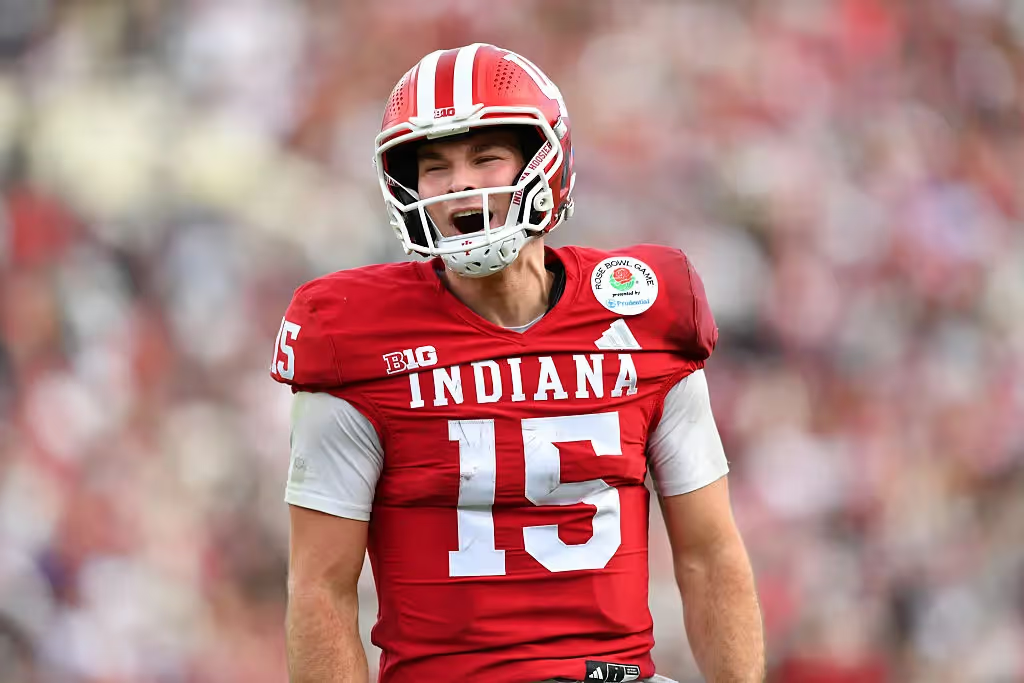

Eleven seconds. That’s all it took for Indiana to announce this wasn’t going to be a semifinal—it was going to be a public dismantling.
Before Oregon could even settle into its stance, the Ducks’ opening snap turned into a nightmare: interception, return, touchdown. D’Angelo Ponds sprinted 25 yards into the end zone, and just like that, the Peach Bowl was over in spirit, if not yet on the scoreboard. By halftime, the numbers matched the vibes. By the fourth quarter, Indiana was already booking flights.
No. 1 Indiana 56, No. 5 Oregon 22. A blowout. A statement. A warning.
The Hoosiers didn’t just punch their ticket to the College Football Playoff National Championship—they stapled it with authority and reminded everyone that this 15–0 season isn’t cute anymore. It’s dominant.
From the Jump: Indiana Chose Violence
This game never had a feeling-out period. Indiana skipped the small talk and went straight to the throat.
Oregon’s first play from scrimmage ended with Ponds jumping the route, snatching the ball, and housing it before most fans had found their seats. Eleven seconds in, Indiana led 7–0, and the tone was set: mistakes would be punished immediately.
The Ducks never recovered.
Indiana’s defense swarmed early, forcing confusion, pressure, and turnovers that felt less like bad luck and more like inevitability. Oregon quarterback Dante Moore spent the first half running for his life, coughing up two fumbles, both of which turned directly into Indiana touchdowns. This wasn’t bend-don’t-break defense. This was break-you-and-take-your-wallet defense.
By the end of the first quarter, Indiana had momentum. By the middle of the second, they had complete control. By halftime? 35–7, and the outcome was academic.
Fernando Mendoza: Surgical, Ruthless, Unbothered
If this season has been a coming-out party for Fernando Mendoza, the Peach Bowl was his masterclass.
The junior quarterback finished 17-of-20 for 177 yards and five touchdowns. Read that again: five touchdowns, three incompletions. That’s not efficiency—that’s flexing.
Mendoza spread the ball like a veteran point guard carving up a zone defense. Charlie Becker got loose downfield. Elijah Sarratt found the end zone twice. Omar Cooper Jr. and E.J. Williams Jr. both cashed in. No hero ball. No panic throws. Just clean reads, quick decisions, and a defense slowly realizing it was outmatched.
The most impressive part? Indiana never needed Mendoza to chase stats. He didn’t force anything because he didn’t have to. The game came to him, and he took everything Oregon gave him—then took more.
The Trenches Told the Real Story
As flashy as the touchdowns were, this game was won in the less glamorous places.
Indiana’s offensive line controlled tempo, balance, and physicality. The run game didn’t dominate yardage totals, but it finished drives, which matters more. Kaelon Black’s two rushing touchdowns were exclamation points—power runs that turned red-zone opportunities into inevitabilities.
Defensively, Indiana’s front made Oregon uncomfortable from the first snap. The Ducks’ explosive offense never found rhythm, never found confidence, and never found answers. Even when Oregon managed some late production, it felt like empty calories—stats without impact.
This wasn’t a shootout. It was a mismatch.
The Turning Point (If You Can Call It That)
Technically, the turning point was the opening snap.
But if you need a moment where the door slammed shut, it was the second Oregon turnover deep in its own territorymidway through the first half. Another short field. Another Indiana touchdown. Any lingering hope evaporated right there.
At that point, the Peach Bowl shifted from competition to coronation.
Stats That Actually Matter
35–7 halftime lead: Indiana turned a CFP semifinal into a scrimmage before the band even warmed up.
Five first-half touchdowns off chaos: turnovers, short fields, busted coverages—Indiana capitalized on everything.
15–0 record: still perfect, still rolling, still untouched by doubt.
Advanced numbers will love this game. But the eye test told you everything you needed to know.
What This Win Means
For Indiana, this is history. Full stop.
This program doesn’t have a trophy case filled with dust-covered national titles or grainy black-and-white highlights. It has decades of near-misses, underachievement, and irrelevance on the national stage. All of that is gone now.
Under Curt Cignetti, in just his second season, Indiana has gone from afterthought to juggernaut. One win away from a national championship. One win away from a perfect 16–0 season that would instantly become one of the most improbable runs college football has ever seen.
For Oregon, this was a harsh reminder of the playoff margin. The Ducks are talented. Dangerous. Capable of fireworks. But turnovers at this level aren’t forgiven—they’re weaponized.
And for the sport? This is the expanded playoff delivering exactly what it promised: new blood, new stories, and absolute chaos for anyone clinging to preseason assumptions.