Hurricanes Survive Fiesta Bowl Classic, Punch Ticket to National Title With Last-Second Dagger
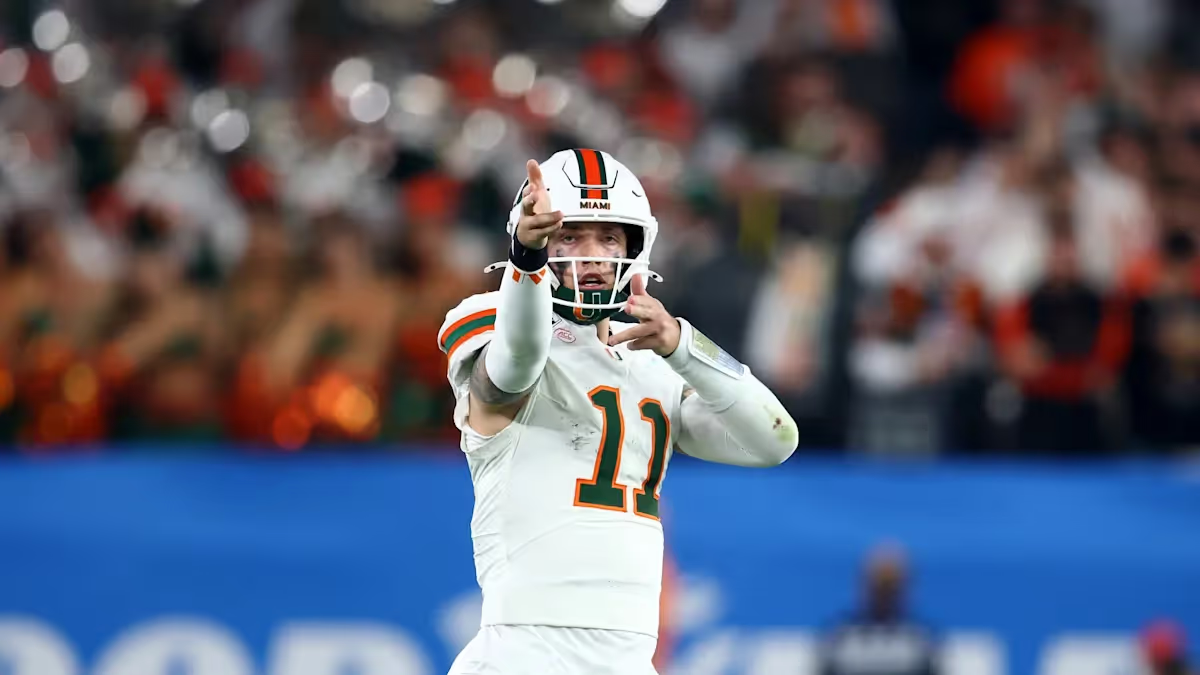

For three hours inside State Farm Stadium, Miami and Ole Miss turned the Fiesta Bowl into a stress test for heart rates, defensive coordinators, and anyone who thought the expanded College Football Playoff might lack drama.
Then Carson Beck did what seasons — and legacies — are made of.
With 18 seconds left, the Hurricanes quarterback tucked the ball, saw daylight, and sprinted three yards into history. Touchdown. Chaos. Miami 31, Ole Miss 27. The U is heading to the national championship for the first time since the flip-phone era, and they did it the most Miami way possible: by dragging a heavyweight into deep water and refusing to blink.
A Game That Never Let Anyone Get Comfortable
This wasn’t a shootout. It wasn’t a blowout. It was a slow-burn, pressure-cooker semifinal where every possession felt like a referendum on philosophy.
Miami wanted control. Ole Miss wanted lightning.
From the opening kick, the Hurricanes dictated tempo like they had a remote control. Long drives. Heavy personnel. Offensive linemen leaning on defenders like it was leg day. The opening score — a 38-yard Carter Davis field goalafter a 13-play march — told you everything about the plan. Miami wasn’t in a hurry. They were here to occupy space and oxygen.
Ole Miss, meanwhile, spent the early part of the night trying to catch its breath. Miami’s defense swarmed, forcing early three-and-outs and keeping the Rebels’ explosive attack bottled up just enough to frustrate.
But this game was never going to stay quiet.
Second Quarter: Fireworks, Field Goals, and Momentum Swings
The second quarter is where the Fiesta Bowl fully came alive.
Miami extended its lead with a 15-play, 75-yard drive that felt more like a thesis statement than a touchdown. CharMar Brown’s 4-yard TD run capped it, the product of patience, leverage, and a line that consistently won first contact.
Ole Miss answered the only way it knows how: by detonating the script.
Kewan Lacy ripped off a 73-yard touchdown run, flipping field position and mood in one snap. Suddenly, the Rebels had juice. Suddenly, Miami’s margin for error felt thin.
And when Ole Miss couldn’t finish drives? Lucas Carneiro made sure points still showed up. A parade of field goals — including a 58-yarder that would’ve been good from Scottsdale — kept Ole Miss within striking distance even when the offense sputtered in the red zone.
Then came the moment that felt like a gut punch for the Rebels.
Carson Beck saw a coverage bust and didn’t hesitate, launching a 52-yard strike to Keelan Marion that flipped the stadium on its head. Miami walked into halftime with a 17–13 lead, but the scoreboard didn’t reflect how narrow the margins already felt.
Third Quarter: Tension Without Resolution
If the second quarter was chaos, the third was a staring contest.
Miami continued to bleed clock and bodies, leaning into a ground game that would finish with 191 rushing yards and an absurd 41:22 time of possession. That number matters. A lot. Miami didn’t just keep the ball — they weaponized it.
Ole Miss managed just one field goal in the quarter, another Carneiro special, trimming the deficit but never fully flipping momentum. Every Rebel possession felt like a must-have. Every Miami first down felt like a personal insult.
By the time the fourth quarter arrived, both teams were upright, exhausted, and fully aware that one mistake would define the night.
Fourth Quarter: Sponsored by Cardiac Arrests
The final 15 minutes were pure college football madness.
Ole Miss finally broke through with urgency. Trinidad Chambliss, who quietly piled up nearly 277 passing yards, found Dae’Quan Wright for a 24-yard touchdown with just over three minutes left. Lane Kiffin, choosing violence, went for two — and hit Caleb Odom to make it 27–24.
For the first time all night, Miami was chasing.
Cue the drive.
The Defining Moment: Miami’s 15-Play Masterpiece
If you ever need to explain “situational football” to someone, just show them Miami’s final possession.
15 plays. 75 yards. No panic. No shortcuts.
Beck converted key throws — 17 yards to Keelan Marion, 11 more on the next connection — moving the chains and draining Ole Miss’ hope one snap at a time. The offensive line held. The running backs fell forward. The clock bled.
Then Beck kept it himself.
Seeing space, feeling the moment, he scrambled for a 3-yard touchdown with 18 seconds left, sealing a drive that will live forever in Miami lore.
Ole Miss’ final heave into the end zone fell incomplete. The confetti cannons waited their turn. Miami exhaled.
Star Performances That Defined the Night
Carson Beck: Calm Under Fire
Beck’s stat line — 23-of-37, 268 yards, two touchdowns, one interception — doesn’t scream legend. His composure does. He didn’t force hero ball. He managed the moment, trusted his protection, and saved his biggest play for when it mattered most.
Miami’s Offensive Line and Ground Game
This was trench warfare. Miami’s ability to control downs, convert on third and fourth, and keep Ole Miss’ offense watching from the sideline was the game’s quiet backbone.
Lucas Carneiro: Ole Miss’ Lifeline
Four field goals, including multiple from distance. Without him, Ole Miss never sniffs this game late.
Stats That Actually Mattered
Time of Possession: Miami 41:22 — absolute domination.
Red-Zone Reality: Ole Miss settled for field goals. Miami finished.
Explosive Balance: Miami mixed long drives with timely shots. Ole Miss relied on bursts — thrilling, but volatile.
What This Win Means
Miami is back on college football’s biggest stage — literally and metaphorically. This win sends the Hurricanes to the national championship game at Hard Rock Stadium, their home field, chasing a first title since 2001.
For Ole Miss, this hurts. The Rebels were close. But field goals don’t beat teams that control the game this thoroughly, and in the playoff, margin for error is a rumor.
For the sport? This is the expanded playoff at its best — underdogs surviving, styles clashing, and seasons ending on inches.
Final Take: Miami Didn’t Flinch
Ole Miss threw haymakers. Miami absorbed them, leaned back into the fight, and won with patience and nerve.
This wasn’t pretty. It was powerful.
And now, with a title shot waiting at home, the Hurricanes have turned a chaotic season into something dangerously close to destiny.