Scottie Scheffler Dominates The American Express, Stomps Field in Desert Statement Win
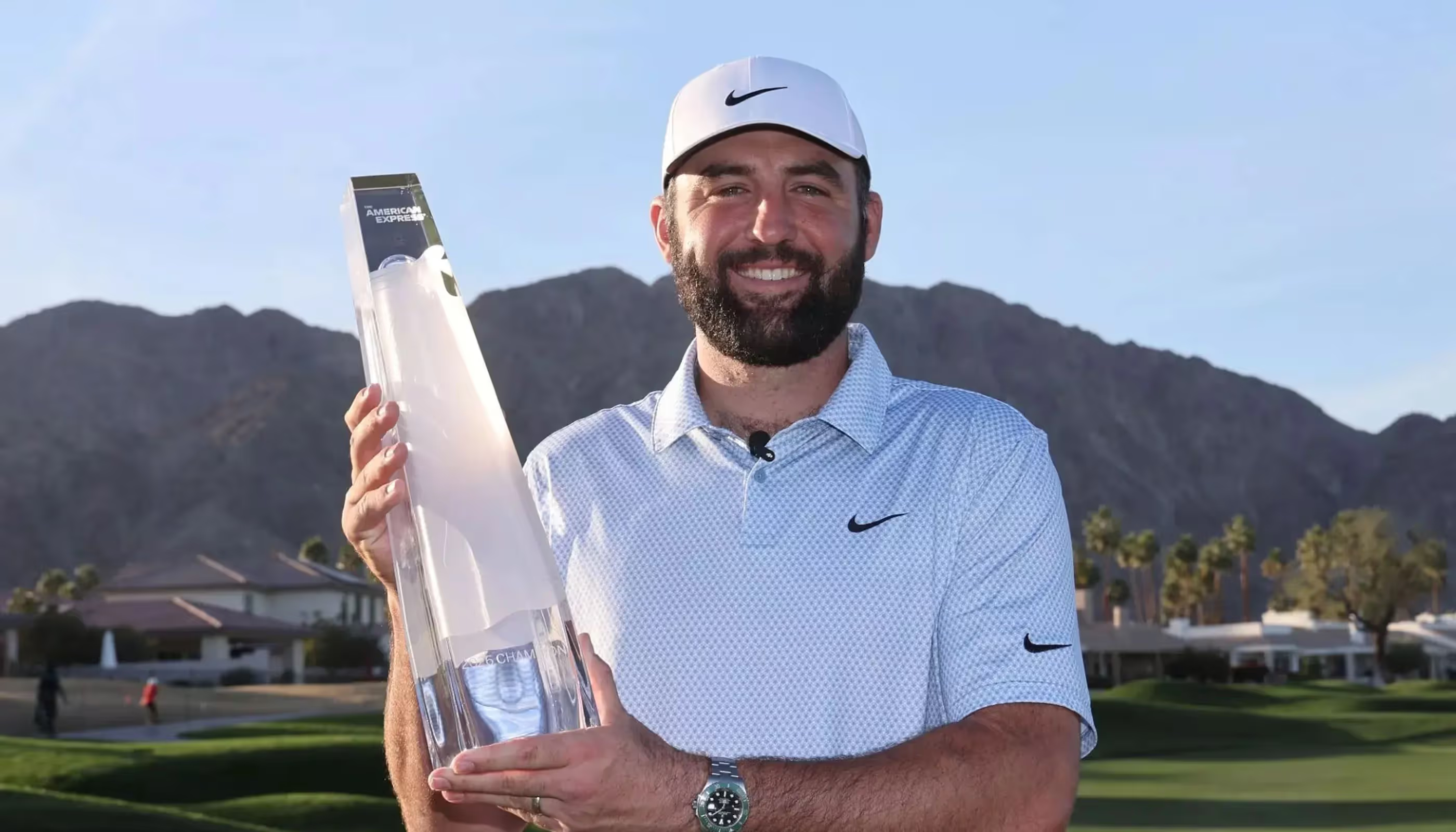

The PGA Tour’s early-season desert swing has a way of blurring reality. Easy scoring conditions, low numbers everywhere, leaderboards that look more like video games than professional golf. And yet, even in a tournament built for birdies, Scottie Scheffler managed to separate himself from the chaos and remind everyone who actually runs this sport.
Scheffler closed with a composed, clinical 6-under 66 on Sunday to finish 27-under par, cruising to a four-shot victory at The American Express at PGA West. It was his 20th PGA Tour win, making him the second-fastest player in history to reach that milestone, and it came with the kind of inevitability that has become his trademark. By the time the sun dipped behind the Santa Rosa Mountains, this wasn’t a question of who would win — it was a reminder of how large the gap still is between the world No. 1 and everyone else.
This wasn’t dramatic. It wasn’t messy. It was Scheffler doing Scheffler things in an environment designed to expose even small weaknesses. There were none.
A Tournament Built for Scoring — and a Champion Built for Control
The American Express has always been a birdie festival. Three courses, receptive greens, calm desert air, and a pro-am vibe that encourages aggression. This year was no different. Scores plummeted from the opening round, and by Friday afternoon it was clear that anything short of the mid-20s under par wasn’t going to sniff contention.
Scheffler opened the week by immediately planting his flag with a low round that set the tone. While others flashed brilliance in bursts, he stacked quality rounds like it was muscle memory. Nothing felt forced. Nothing felt rushed. Just fairways, greens, and enough putts to stay in the driver’s seat.
At the same time, the tournament picked up a secondary storyline that felt ripped from a Netflix pitch meeting.
Enter Blades Brown, the teenage phenom who didn’t just announce himself — he detonated onto the leaderboard. Brown surged into contention early, even leading or co-leading through parts of the week, and for a moment it looked like the desert might crown its newest prodigy.
Golf, however, is very good at reminding young players how hard Sundays can be.
Sunday: When the Best Player Decided It Was Time
Scheffler didn’t enter the final round with the outright lead, but he entered it with something far more valuable: patience. While early challengers tried to sprint, Scheffler stalked.
Then came the stretch that ended the tournament.
On a Sunday that demanded scoring, Scheffler delivered four birdies over a six-hole stretch, flipping the leaderboard without theatrics or highlight-reel heroics. Just precision iron shots, stress-free two-putts, and the kind of quiet momentum that suffocates fields. It wasn’t a barrage — it was a takeover.
As others began to leak oil, Scheffler stayed steady. Blades Brown, feeling the weight of the moment after a grueling stretch of competitive golf, faded. Other contenders hovered but never truly threatened. Every time someone made a move, Scheffler had an answer within a hole or two.
By the back nine, it felt less like a competition and more like a coronation.
Scottie Scheffler: The New Normal Is Dominance
The numbers tell one story. The body language tells another.
Scheffler’s 27-under total wasn’t just the lowest of the week — it was a reflection of how comfortable he has become winning on command. This marked the 20th PGA Tour victory of his career, a milestone reached faster than all but one player in the modern era. It also pushed his career PGA Tour earnings past $100 million, a financial checkpoint that underscores just how relentlessly productive his prime has been.
What makes Scheffler different isn’t just his ball-striking, which remains elite. It’s his ability to eliminate volatility. In a tournament where everyone is making birdies, he simply makes fewer mistakes. He doesn’t chase. He doesn’t panic. He lets the course come to him, then quietly bleeds the field dry.
Even when small hiccups appeared — a rare mistake late in the round — they barely registered. The margin was built early, protected intelligently, and never truly threatened.
This is what dominance looks like in modern golf. Not fireworks every hole. Control over four days.
Blades Brown and the Cost of Leading Early
Brown’s week deserves context, not criticism.
The teenager captured attention early by playing fearless golf and briefly sitting atop a leaderboard that included the best players in the world. That matters. It matters a lot. Leading or co-leading a PGA Tour event before your 20th birthday is not normal, and it doesn’t happen by accident.
But Sunday exposed the reality of professional golf’s grind. Fatigue, pressure, and the weight of expectation caught up to him. His final round didn’t match the brilliance of his early work, and he slid out of contention as Scheffler surged.
Still, Brown leaves La Quinta with momentum, credibility, and a name that will no longer surprise anyone scrolling leaderboards. This wasn’t a fluke. It was an introduction.
The Defining Stretch
Every tournament has a moment where it tips from competitive to inevitable. At The American Express, it was that six-hole run on Sunday where Scheffler stacked birdies while the field blinked.
That stretch didn’t just change the leaderboard — it changed the psychology of the day. Chasers stopped attacking pins. Players protecting position stopped pressing. The energy shifted. Scheffler had taken control, and everyone knew it.
That’s the difference between winning and dominating.
The Stats That Actually Matter
This wasn’t a stat-padding week. It was a statement.
27-under par in conditions that demand aggression — and still standing alone
Four-shot margin of victory, even with multiple players posting low numbers
20 PGA Tour wins, reached faster than almost anyone in history
$100 million in career earnings, a reflection of sustained excellence, not flash
In a sport obsessed with hot weeks and small samples, Scheffler keeps stacking seasons.
What This Win Really Means
This victory didn’t just add another trophy to Scheffler’s shelf. It reinforced the hierarchy of the PGA Tour heading into the heart of the season. He is still the standard. Still the problem everyone else has to solve.
For the rest of the field, The American Express was a reminder that birdie-fests don’t level the playing field — they expose it. When scoring gets easy, the best players don’t just keep up. They pull away.
And for fans, it set the tone early: if you’re looking for drama at the top of leaderboards in 2026, it’s probably going to involve figuring out who finishes second.
Final Thought
The desert has a way of revealing things clearly. No weather excuses. No brutal setups. Just golf.
And in that environment, Scottie Scheffler didn’t just win — he validated his place at the top of the sport once again. Quietly. Efficiently. Ruthlessly.
Same story. Same ending.
The only question left is how long everyone else can keep pretending they’re catching up.