Bobcats Drop the Hammer After Halftime, Cruise to 41–10 Armed Forces Bowl Win
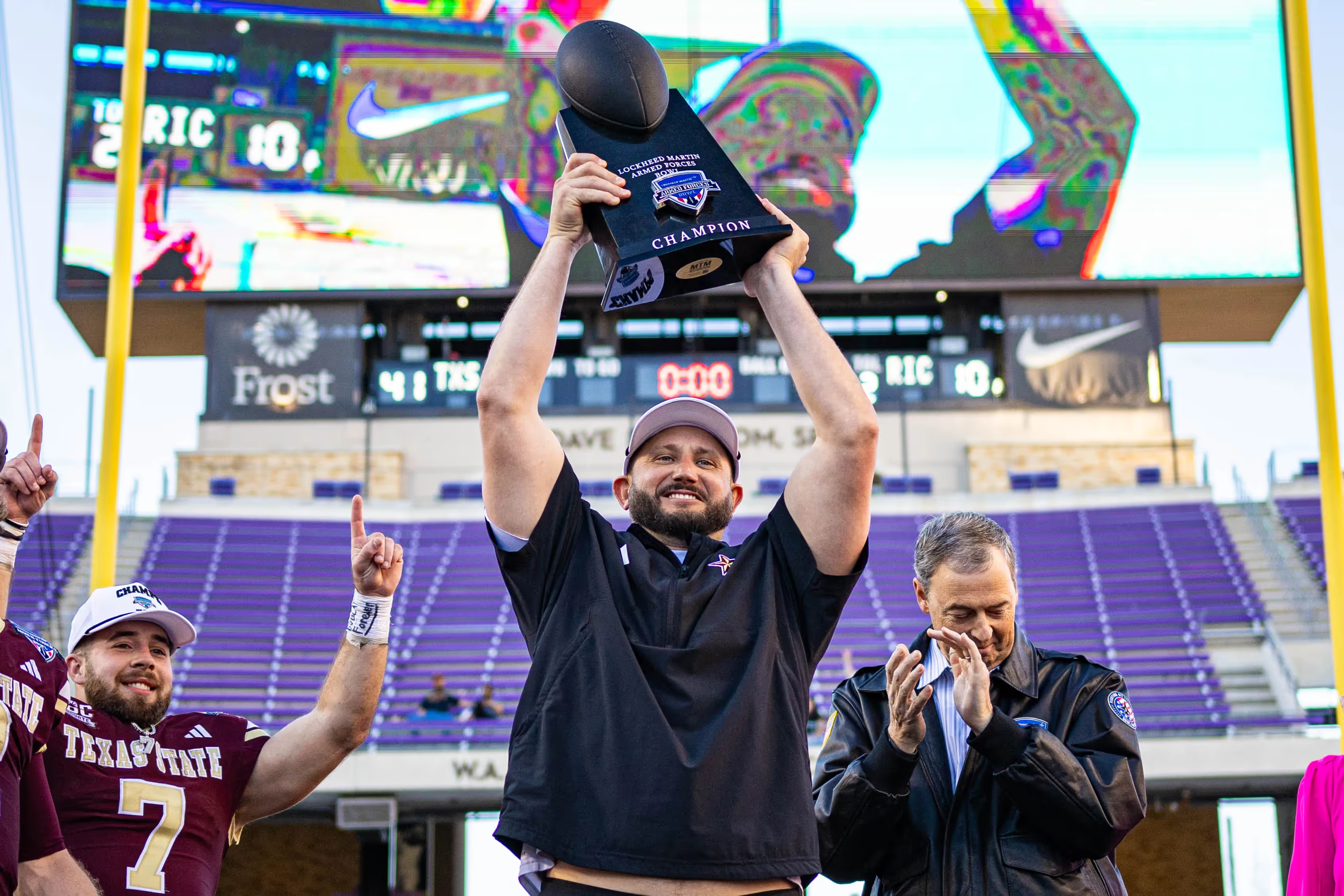

There’s winning a bowl game… and then there’s taking it over.
Texas State spent the first half of the Armed Forces Bowl feeling things out, trading punches, and letting Rice believe — just a little — that this might be a game. Then halftime hit, adjustments were made, and the Bobcats turned Fort Worth into their personal highlight reel.
Behind a four-touchdown performance from quarterback Brad Jackson and a second-half avalanche that Rice never recovered from, Texas State Bobcats demolished Rice Owls 41–10 on Friday, capturing the Lockheed Martin Armed Forces Bowl crown and cementing one of the most successful stretches in program history.
What started as a grind turned into a blowout — fast.
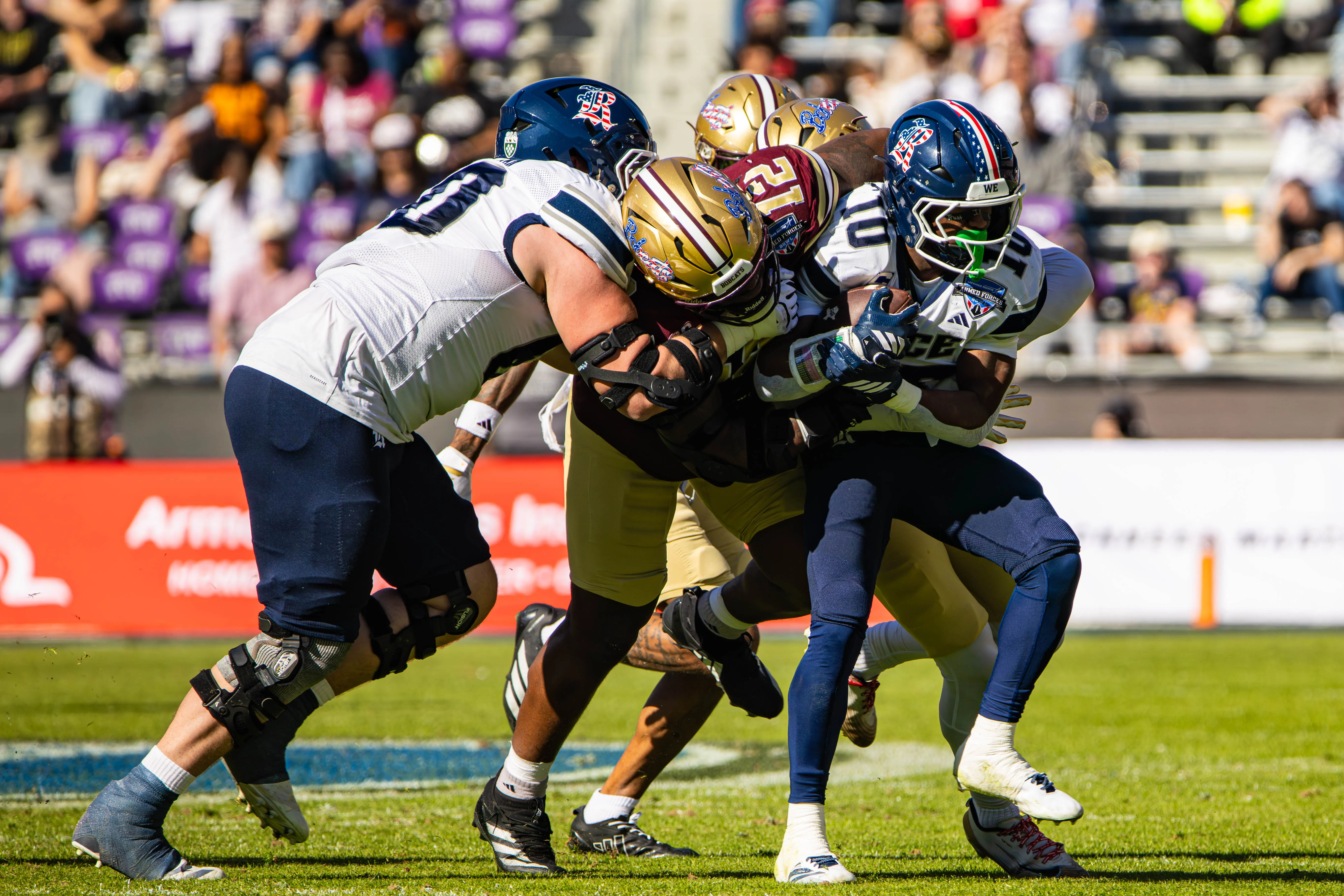
A Slow Burn Before the Explosion
The opening quarter felt like a game still loading.
Both teams traded early possessions, defenses held their ground, and the scoreboard stayed quiet longer than expected. Texas State moved the ball but didn’t force anything. Rice tried to establish rhythm but found space hard to come by.
The moment that cracked things open came early in the second quarter.
Redshirt senior defensive back Jaden Rios jumped a pass on the second play of the frame, snagging an interception that flipped field position and momentum in one smooth motion. Eight plays later, Brad Jackson finished the job himself, punching in a 6-yard rushing touchdown to put Texas State on the board.
It wasn’t flashy — it was foundational.
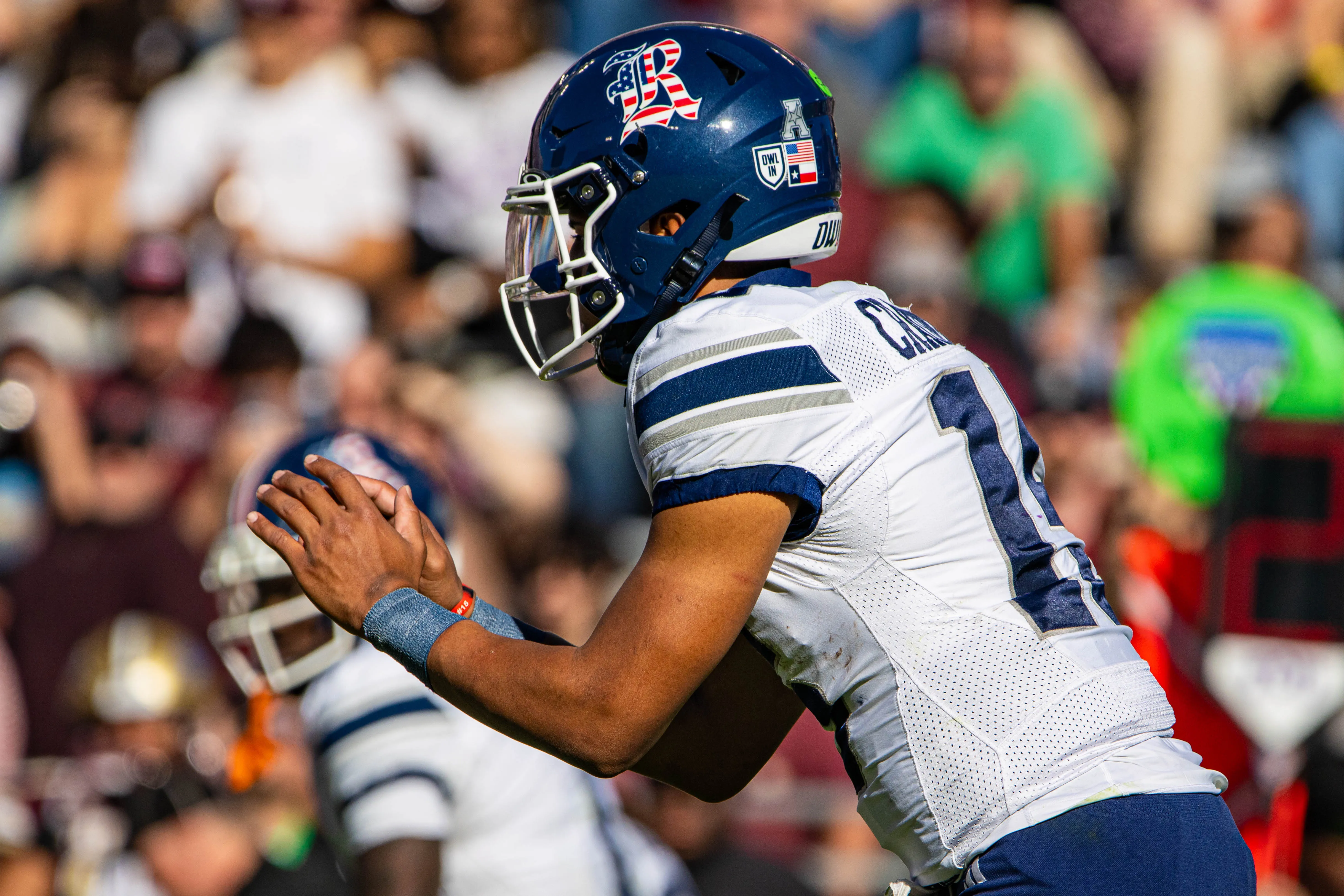
Rice answered with its lone bright spot of the day, a short touchdown pass from Patrick Crayton Jr. to Aaron Turner, briefly tying the game and injecting some life into the Owls’ sideline. But even then, it felt temporary.
Texas State grabbed a slim 10–7 lead into halftime, and while the score was close, the body language wasn’t.
Halftime Adjustments, Second-Half Domination
If the first half was a feeling-out process, the second half was Texas State making a statement.
Immediately after the break, Jackson uncorked the throw that changed the tone of the entire game — a 69-yard strike to Beau Sparks that stretched Rice’s defense vertically and announced that the Bobcats were done playing small.
From there, it was a clinic.
Chris Dawn Jr. took over underneath and in the red zone, hauling in touchdown passes of 12 and 14 yards as Rice’s coverage began to fracture. Jackson spread the ball confidently, hitting receivers in stride and keeping the Owls on their heels.
The Bobcats scored 31 unanswered points after halftime, converting five of their eight second-half possessions into points and turning a close contest into a rout.
Rice never found footing. Texas State never let up.
Brad Jackson: In Total Command
This was the kind of bowl performance that defines careers.
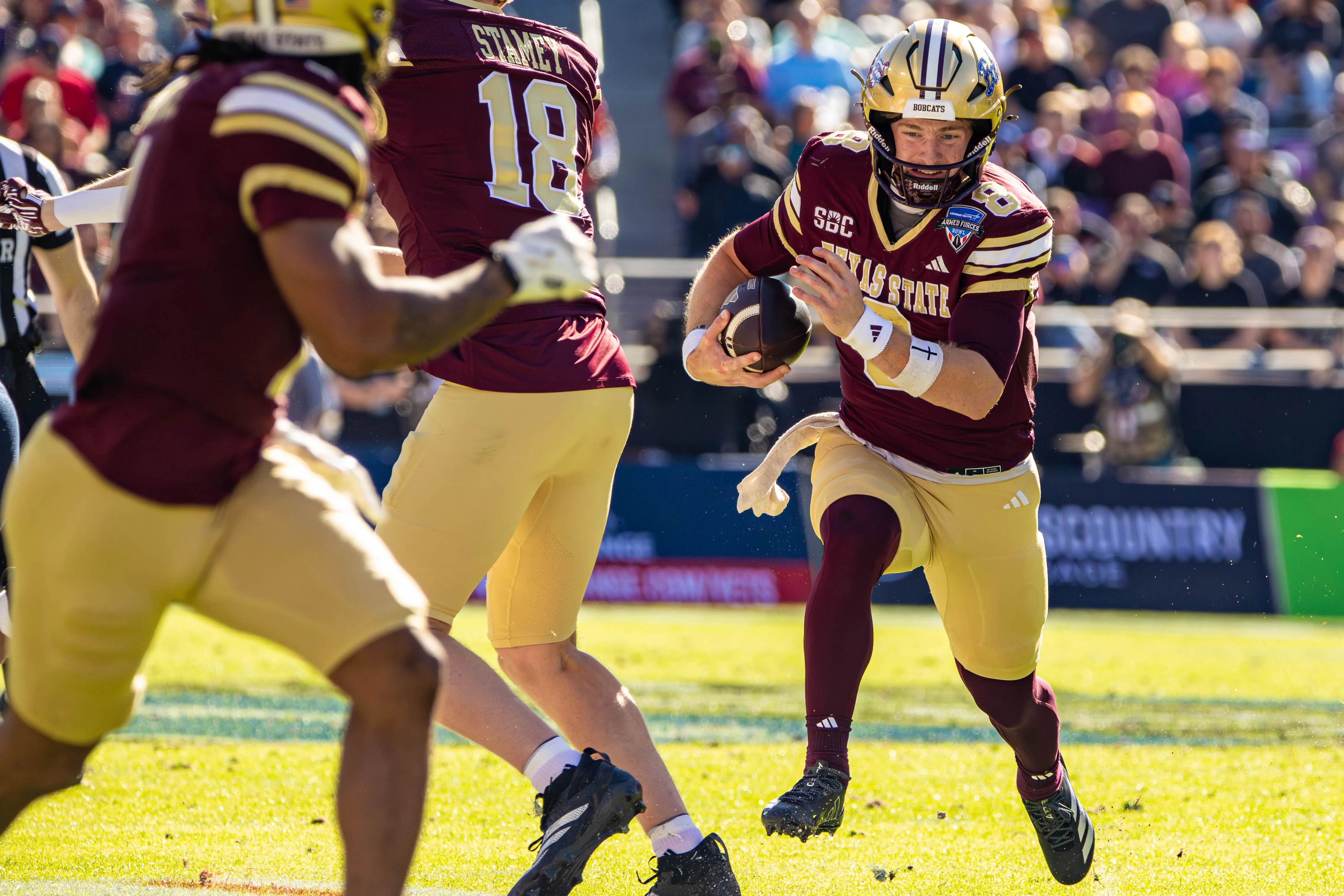
Brad Jackson didn’t just manage the game — he owned it. The redshirt freshman completed 17 of 24 passes for 173 yards and three touchdowns, added 52 rushing yards, and accounted for four total touchdowns.
He was decisive, calm, and relentless — the exact profile head coach GJ Kinne wants running his offense.
No panic throws. No wasted movement. Just reads, timing, and execution.
And when Rice tried to rally? Jackson answered.

Ground Game Delivers the Knockout Punch
As the passing game softened Rice up, the run game finished the job.
Lincoln Pare, playing his final collegiate game, put an exclamation point on his career with a 63-yard burst up the middle in the fourth quarter — a run that felt like the official surrender moment. Pare finished with 106 yards on just 11 carries and a touchdown, pushing his season total to 1,022 rushing yards.
Greg Burrell added another 81 yards in relief, giving Texas State a true two-headed backfield attack that Rice simply couldn’t match.
Once the Bobcats were ahead, they leaned into physicality — and Rice faded.

Defense Turns the Lights Out
Lost in the offensive fireworks was a defensive performance that quietly dominated from start to finish.
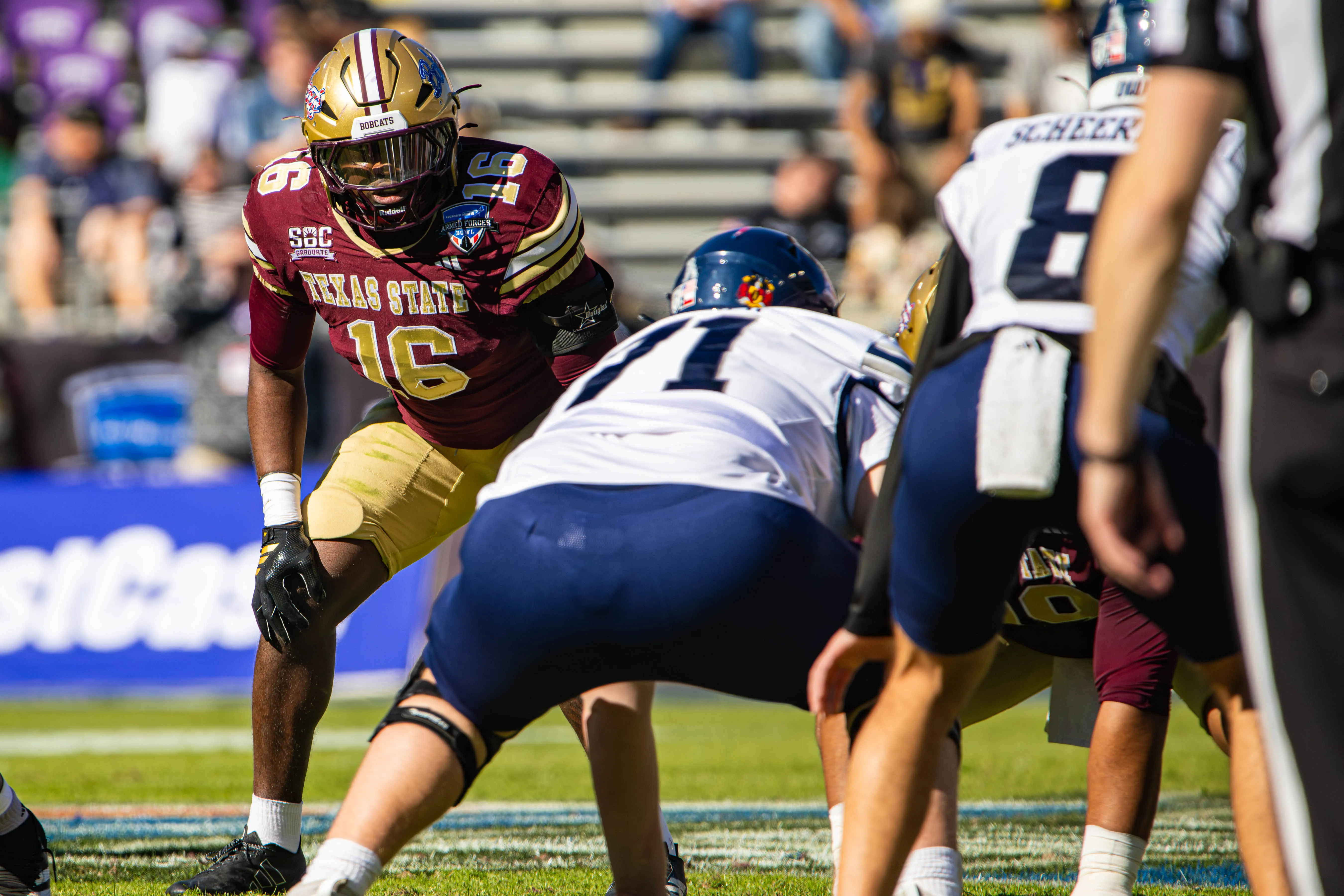
Texas State’s defense forced three takeaways, racked up 13 tackles for loss, and held Rice to just 195 total yards — with 128 of those coming on the Owls’ two scoring drives.
Kenard Snyder anchored the front, finishing with five tackles and three tackles for loss, consistently disrupting Rice’s timing and collapsing pockets before plays could develop.
Patrick Crayton Jr. was under constant pressure, finishing 4-of-? for 70 yards with an interception, and Rice never found a way to establish rhythm or tempo.
This wasn’t bend-but-don’t-break. This was suffocating.
The Turning Point: From Close to Gone
The game technically stayed competitive until early in the third quarter.
In reality? It ended the moment Texas State stacked touchdowns back-to-back coming out of halftime.
The deep shot to Sparks followed by Dawn Jr.’s first score broke Rice’s defensive confidence. From there, every Bobcat drive felt inevitable, and every Rice possession felt uphill.
By the time Pare ripped off his long touchdown run, the outcome was academic.
Stats That Actually Matter
- Texas State scored 31 unanswered points after halftime
- The Bobcats are now 3–0 in bowl games, all under GJ Kinne
- Jackson accounted for four total touchdowns
- Texas State held Rice to 195 total yards
- The Bobcats have now posted three straight winning seasons — a program first
No stat sums it up better than this: Rice never scored again after halftime.
What It Means for Texas State
This wasn’t just a bowl win — it was a program marker.
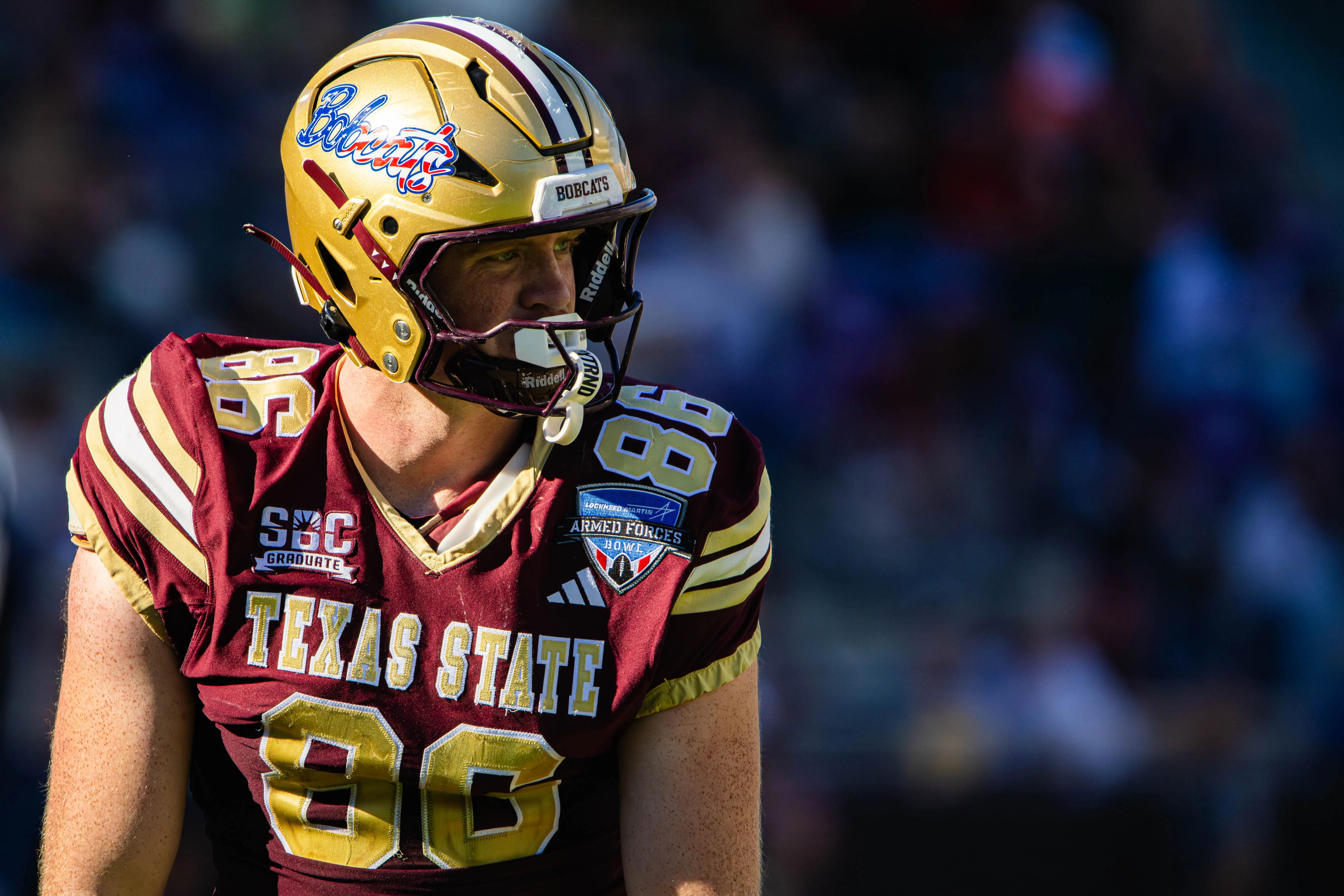
Texas State finishes 7–6, captures its third straight bowl victory, and continues to establish itself as one of the Sun Belt’s most reliable postseason performers. All three bowl wins have come against in-state opponents. All three have come with authority.
Under GJ Kinne, the Bobcats don’t just show up in December — they finish seasons the right way.
For a program still building national credibility, moments like this matter. A lot.
Final Take: This Wasn’t Close — And That’s the Point
The Armed Forces Bowl started as a contest and ended as a coronation.
Texas State took Rice apart with balance, discipline, and confidence, turning a seven-point halftime lead into a 31-point second-half statement. Brad Jackson looked like a quarterback you can build around. The defense played with teeth. The run game closed the door.
Three bowl games. Three wins. Zero drama.
Texas State didn’t just win this one — they claimed it.