
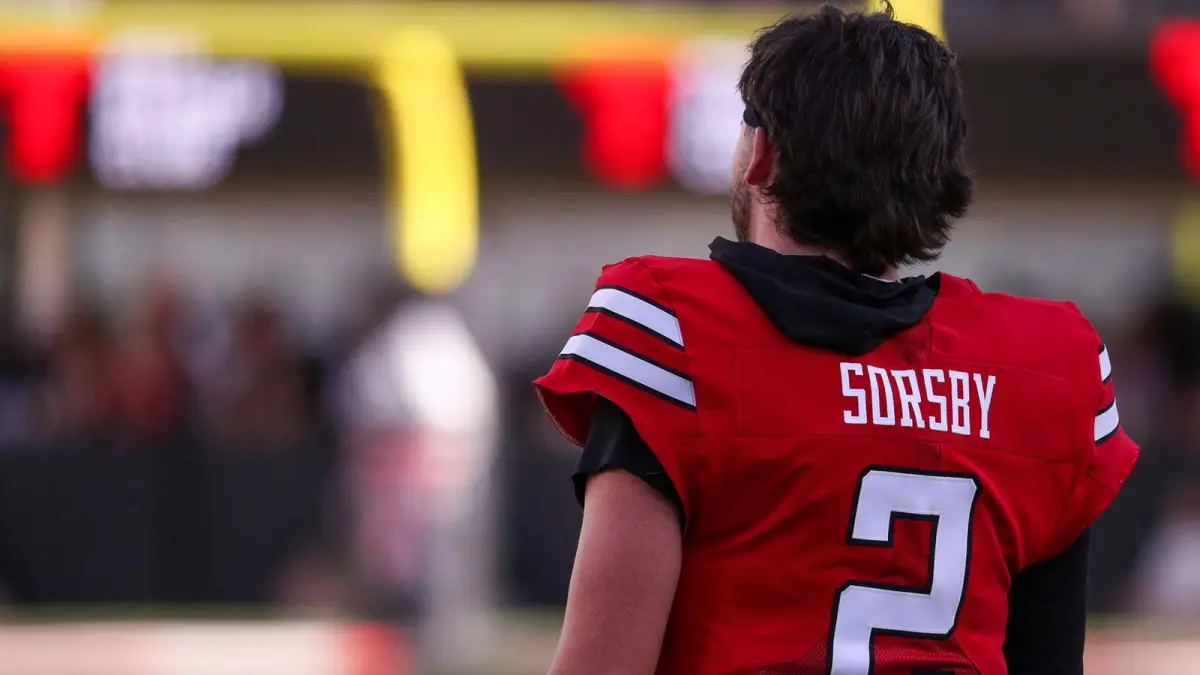
Every July, coaches gather at media days to perform optimism. This summer a lot of them performed rage.
The Brendan Sorsby story, Texas Tech’s quarterback fighting through a gambling addiction case and legal wrangling for eligibility, owned the offseason conversation. Sports Illustrated’s survey of more than 40 Power 4 coaches found a clear majority disgusted by the idea that a player with a massive betting history might have been cleared to play. Sorsby ultimately withdrew his NCAA lawsuit and was denied entry into the NFL supplemental draft, leaving him out of football for the coming season.
The ending did not erase the argument. It clarified how fragile the sport thinks its integrity rules are.
Why coaches lost it
The first team meeting at every program includes some version of the same sermon: do not bet on sports. Title IX training and gambling education are the two speeches nobody skips. Coaches told SI that watching a courtroom path threaten that bright line made their own locker-room messages feel optional.
Several framed it as an enforcement failure bigger than one quarterback. Tampering investigations stall. College Sports Commission complaints linger. Then a local legal fight appears to offer an alternate universe where the loudest advocate wins. That combination is how “wild west” stopped being a metaphor and started being a staffing meeting agenda item.
There was sympathy too, especially for a young player owning a problem instead of hiding it. Sympathy and eligibility are different conversations. Most coaches refused to merge them.
Texas Tech’s target
Joey McGuire has said the Red Raiders already felt hunted after an aggressive portal year. The Sorsby fight painted a brighter bullseye. Some athletic directors quietly floated the idea of avoiding future nonconference dates with Tech. Whether that becomes policy or posturing, the reputational cost is real.
Booster politics and boardroom intensity became part of the public narrative. Fair or not, other programs heard “win the press conference at all costs” louder than “protect the kid.” In a sport currently allergic to shared standards, perception hardens fast.
The integrity problem is structural
Legal sports betting is everywhere. Apps live on the same phones as playbooks. Education helps. Deterrence needs teeth. Coaches keep saying the quiet part: if the third rail can be negotiated around, every other rule gets softer overnight.
The NFL’s firmer posture on the supplemental draft became, for some coaches, the punch line. The pro league drew a harder line than college’s summer soap opera. That should embarrass somebody with a rulebook.
Conference offices responded with more education decks and integrity-firm monitoring. That helps at the margins. It does not answer the coach who has to stand in front of a roster and explain why the brightest line in the sport looked negotiable for one famous name.
Gambling partners will keep buying inventory because the ratings are real. Programs will keep running PSA campaigns because the liability is real. The Sorsby summer showed those two realities can collide in the same news cycle and leave coaches holding the contradictions.
Texas Tech wants to move on to camp. The rest of the sport filed the episode under unfinished business.
Closing take
Sorsby is not playing this fall. The argument he forced is.
College football can sell betting partnerships and preach purity in the same breath for only so long before coaches stop pretending the sermon still works.



POPULAR

Chance Morrow’s Third TD Catch Lifts Buffalo Past UAlbany 21–17 in a Thursday Dogfight
By Austyn McFadden

NCAAF
Defense, Dublin, and a Safety: UNC Opens Belichick Year Two With a 15-10 Win Over TCU
By Vinnie Lucia

NWSL
Sophia Wilson Just Won't Stop Haunting Denver, and the Summit's Expansion Reckoning Is Getting Real
By Aaron Leopold

NFL
Ted Hurst III Is Forcing His Way Into the Buccaneers’ Training Camp Conversation
By Samantha Diane
Related

NCAAF
Ayden Jackson Enrolls at USF After Breakout All-Sun Belt Season at Georgia Southern
By Austyn McFadden
NCAAF
The CFP Is Staying at 12 for 2026. The Expansion Fight Is Not Over.
By Kiley McFadden
NCAAF
A July Court Order Turned Fifth-Year Eligibility Into Absolute Chaos
By Kiley McFadden

NCAAF
Indiana Enters Title Defense After an Unthinkable 16-0 Championship Run
By Kiley McFadden
NEWSLETTER
Get the board before the buzz
Sharp coverage across football, basketball, soccer, and the business behind the game.