NCAA Sues Ohio Gov. Mike DeWine Over Fifth-Year Eligibility Executive Order
The NCAA filed a federal lawsuit against Ohio Gov. Mike DeWine on Oct. 16, arguing his executive order letting Class of 2022 athletes play a fifth season is unconstitutional.
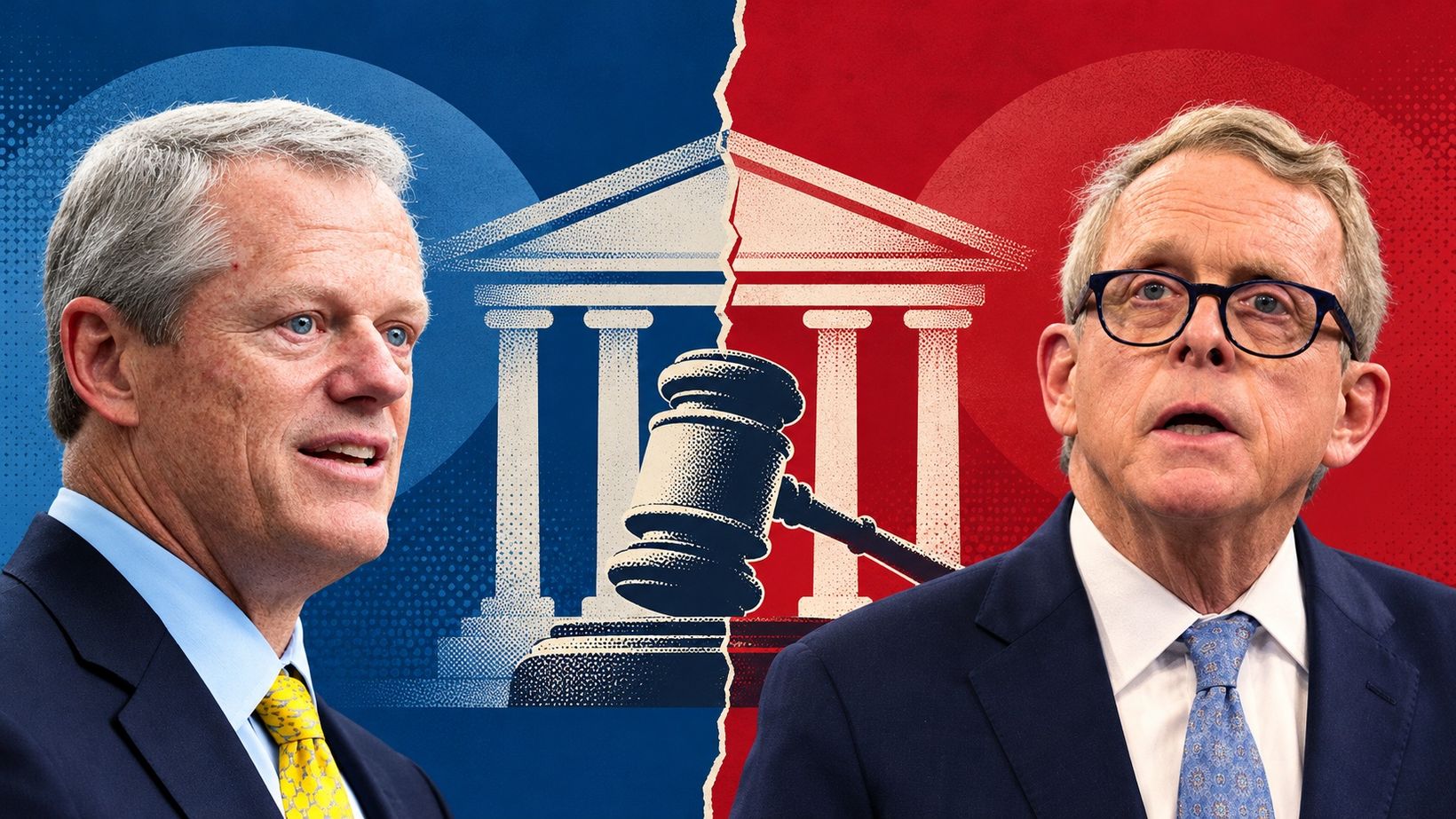
Three days. That is how long it took college sports' governing body to go from irritated to litigious. On Tuesday, Ohio Gov. Mike DeWine signed an executive order telling the state's schools they could let a specific group of veteran athletes suit up for one more season. On Friday, the NCAA marched into federal court and sued him — not a school, not a conference, a sitting governor.
The NCAA filed its complaint in the U.S. District Court for the Southern District of Ohio, Eastern Division, naming DeWine solely in his official capacity. The docket stamp reads Oct. 16, 2026, case No. 2:26-cv-01452. The ask is blunt: declare Executive Order 2026-04D unlawful, strip it of any force, and bar the governor from enforcing it. The NCAA even tacked on a jury demand, because why not go full courtroom drama.
What DeWine Actually Signed
To understand the fight, rewind to June. That is when Division I adopted what it calls the Age-Based Eligibility Model, a long-overdue overhaul that hands every athlete five years of competition. The clock starts with the earlier of two triggers: turning 19 or enrolling in college full-time. Waivers, the endless source of lawsuits under the old four-in-five system, were mostly scrapped, with carve-outs left only for military service, religious missions and pregnancy.
The catch is the transition. The membership chose to apply the model going forward, not backward. Athletes whose eligibility ran out during the 2025-26 academic year — in practice, a lot of the high school Class of 2022 — got nothing new. The NCAA says its governance bodies flagged that decision back in April and wrote it into the legislation adopted in June.
DeWine's order goes straight at that gap. According to the governor's office, EO 2026-04D gives Ohio's public and private colleges the option to let otherwise eligible Class of 2022 athletes compete in 2026-27, regardless of how the NCAA interprets its new rule, while the legal challenges play out. The order's own language, as quoted in the NCAA's complaint, says no Ohio institution "shall uphold" any rule that keeps those athletes off the field in 2026-27, even if they already burned four seasons.
It is not a blank check. The Cincinnati Enquirer reported the order carries conditions: an athlete has to be within five years of both their 19th birthday and their college enrollment as of the start of the 2026-27 year, must have been eligible at the end of their last season, and cannot have played in a professional league.
The NCAA's Three-Pronged Counterpunch
NCAA President Charlie Baker, a former Massachusetts governor himself, framed the suit as an "extraordinary step" ordered by the Board of Governors and the Division I Board of Directors. His statement lays out three separate legal theories, and the complaint fleshes them out.
First, the Commerce Clause. The NCAA argues the order props up in-state schools at the expense of everyone they play, which makes it an unconstitutional burden on interstate commerce. The complaint makes the point that Ohio programs constantly compete across state lines, so the fallout lands mostly outside Ohio's borders.
Second, the First Amendment. Baker's theory is that the order hands Ohio schools legal cover to keep their NCAA membership while ignoring the association's rules — essentially forcing a private association to keep members who refuse to follow its bylaws.
Third, state law. The NCAA calls the order ultra vires, lawyer-speak for "you don't have that power." Baker leaned into his old job here, saying governors are expected to "turn square corners" and stay inside their authority.
The complaint itself doesn't bother with subtlety. It accuses DeWine of trying to hand Ohio schools "a hall pass to break the rules" and calls the order a "misguided attempt" at an "unfair, unprecedented, and unwarranted competitive advantage." That is not the language of an organization looking to settle quietly.
How a Basketball Lawsuit Got Us Here
This did not come out of nowhere. The NCAA's filing traces the order directly to Borovicanin v. NCAA, a Hamilton County case filed June 24, 2026, by a group of Division I basketball players who had exhausted their eligibility under the old bylaws and wanted the new model applied to them.
Those players won a preliminary injunction at the trial level. The NCAA got it stayed, and on Oct. 2, Ohio's First District Court of Appeals vacated it. The players then went to the Ohio Supreme Court, which has stayed the appellate court's mandate and asked for more briefing — specifically on what DeWine's order means for the case. The NCAA's complaint argues the governor's move was, in practical effect, an attempt to nullify the appellate ruling while it was still being fought over.
Baker's statement says the NCAA will answer the Ohio Supreme Court's questions on Monday. He also fired a warning shot at athletic directors: in the NCAA's reading, the state high court did not reinstate the injunction, so it remains stayed, and schools that interpret it otherwise "bear the risk."
Why This Is Bigger Than Ohio
Here's the part that should make every AD in America nervous. The NCAA has 1,092 member schools, 361 of them in Division I, per its own complaint. If one governor can rewrite eligibility for one state's schools, what stops the next one? Front Office Sports' Amanda Christovich noted the NCAA is explicitly worried other states will copy DeWine. Baker called it a "state-by-state and court-by-court race to the bottom."
And the timing is brutal. The Enquirer noted that basketball programs, men's and women's, are locking in rosters right now amid this uncertainty. An experienced fifth-year guard is the most valuable thing a mid-major coach can find in October. Ohio schools suddenly having access to that pool while out-of-state opponents do not is exactly the imbalance the NCAA is screaming about.
The other side of the ledger matters too. To the athletes affected, this is not an abstract federalism seminar. They watched the rules change to five years and got told the new math starts one class too late. Whatever you think of DeWine's legal footing, the frustration behind the order is real, and it is why lawsuits like Borovicanin keep popping up.
The Washington Endgame
Baker's statement is also a lobbying pitch. Even while saying he is confident the NCAA will win in federal court, he pointed to the bipartisan Protect College Sports Act as the real fix and urged member schools to call their representatives. Translation: the NCAA is tired of fighting fifty potential state battles and wants Congress to settle eligibility once and for all.
Until then, college sports keeps doing what it does best in 2026 — litigating. A federal judge in Columbus now holds the next move, the NCAA owes the Ohio Supreme Court answers on Monday, and somewhere a point guard from the Class of 2022 is refreshing his phone, waiting to find out if he still has a season to play.
Cover illustration: Undrafted
Austyn McFadden
Co-Founder
I co-founded Undrafted, helping grow it from two people with cameras into a credentialed sports media organization covering thousands of college and professional events each year. My background spans sports media, brand strategy, identity, and digital design. I have also spoken on photography, branding, and entrepreneurship at Nossi College of Art, Greenon Local Schools, and Wright State University through Reynolds & Reynolds.